May 30, 2009
NTL: Power to the northwest's people?
By Derrick Penner
Vancouver Sun
May 30, 2009
A pro-development group makes the case for federal support of the project
A northern pro-development group is attempting to seize the dual zeitgeist of carbon reduction and economic stimulus to kick-start construction of a power transmission line into the remote northwest.
A $400-million plan to extend the BC Hydro grid 335 km up Highway 37 from Terrace was scuttled in 2007 when Teck suspended plans to build the multibillion-dollar Galore Creek mine 150 km northeast of Stewart, depriving the project of a key private-sector donor.
The project, however, deserves an injection from the federal government's $1-billion green infrastructure fund, a group calling itself the Northwest Powerline Coalition, argues, because it will take communities off diesel-generated electricity, and its construction will provide much needed economic activity in the depressed region.
"We're trying to support the provincial government's efforts to pursue federal funding [for the project]," Pierre Gratton, CEO of the Mining Association of B.C. and coalition member, said in an interview.
Ideally, the coalition would like to take the project one huge step further to extend the line another 117 km for a total of 517 km to reach Dease Lake and a total cost of about $600 million.
Last September, Premier Gordon Campbell committed $10 million to support an environmental review of the proposed 400-km power line.
The coalition estimates that building the line could reduce greenhouse-gas emissions by the equivalent of 35,000 cars just by taking the diesel generators that communities in the region rely on for power offline.
Further, the coalition's report estimates that providing mining companies with electricity to build and operate mines, versus developing them under diesel power, could save the province from adding emissions to the air equivalent to 629,000 cars.
Gratton said the province continues to say that it has $250 million to support the capital cost of the $400-million project, but it still needs other sources of financing; the coalition makes the case that this project fits the bill as a "shovel-ready" project ripe for some of the economic stimulus spending that governments have promised.
"In our business, infrastructure is and always will be one of the precursors to new investment," Gratton said, adding that there is $15 billion worth of proposed mining and power projects in the region that could benefit from the transmission line.
Janine North, co-chair of the coalition and CEO of the provincially sponsored Northern Development Initiative Trust, said the group "advocates for a partnership funding strategy" to develop the project.
The coalition is made up of 49 municipalities and regional districts, first nations communities, the Mining Association of B.C. and the Northern Development Initiative Trust, and was formed just after the powerline project was scuttled.
"It's not just about one potential mine, it's about a huge mineralized area of Northern B.C. that also has great potential for biomass power, hydro run-of-river power and geothermal power," North said.
Elmer Derrick, chief treaty negotiator for the Gitxsan First Nation and the coalition's other co-chair, said construction alone of the power line would offer his community employment opportunities and chances to learn transferable skills.
- - -
HIGHWAY 37 PROJECT
Length: 200 km.
Capital cost: $600 million
Greenhouse-gas-emission savings: 208,000 tonnes annually, the equivalent of 35,000 cars
Greenhouse-gas-emissions avoided: 3.7 million tonnes annually, the equivalent of 629,000 cars
Source: Northwest Powerline Coalition
© Copyright (c) The Vancouver Sun
May 27, 2009
Hydro pays $62 million for homes near power lines
By Jonathan Fowlie
Vancouver Sun
May 27, 2009
 Newly constructed electricity transmission lines tower above homes in Tsawwassen. (Photograph by: Ian Lindsay, Vancouver Sun) |
Corporation hopes to recoup most of its expenditure by reselling houses
BC Hydro will pay $62 million to purchase about 100 homes near a controversial Tsawwassen power line, a document filed by the Crown corporation reveals.
Hydro plans to resell the houses over at least two years and perhaps longer, the document said.
Hydro estimated that by the time the homes are all sold, its net cost for the buyout program will be $23 million.
"It's almost like a capital program in that we acquire $62 million of homes based on estimated property acquisition costs," BC Hydro spokeswoman Susan Danard said.
"That is offset over time by our sales," she added.
Guy Gentner, the New Democratic Party's MLA-elect for Delta North, was extremely critical, saying it would have cost about the same amount to bury the lines underground.
"They've bungled this from the get-go," Gentner said.
In an e-mail Tuesday, BC Transmission Corp. spokeswoman Janet Stewart said it would have cost an estimated $24 million to bury the new lines. If BC Transmission had gone that route, she said, the old overhead lines would have remained in place until 2018.
"The BCUC [BC Utilities Commission] rejected this option, citing lack of community support," Stewart said in the e-mail.
Energy Minister Blair Lekstrom could not be reached for comment.
Under direction from the provincial government, BC Hydro had been negotiating since January to purchase 104 homes from upset owners living directly adjacent to a new 3.7 kilometer high-voltage line.
The power project has sparked significant community outrage against the B.C. Liberal government, some of which factored into the recent election race in Delta South, where independent Vicki Huntington defeated Liberal Attorney-General Wally Oppal.
Consisting of 20 tall steel poles, the new power line replaced an older one with shorter wooden poles.
The new lines -- which supply power to more than 700,000 customers on Vancouver Island and the Gulf Islands -- transmit 230 kilovolts of power. The original lines transmitted 138 kilovolts.
Government approval for the project came after more than three years of public consultation, though many residents remained opposed to the project because of feared health effects of a high-voltage line, and because of the appearance of the project.
While homeowners began receiving offers for their homes earlier this year, it has not been known until now how much the entire program would cost.
Last Thursday, the utilities commission approved an application from Hydro that said it would spend $62 million to buy 104 homes -- an average of $597,000 per house.
The filing said Hydro will spend an additional $20 million on financing and administrative costs, and to make energy efficiency improvements at some of the properties.
It said Hydro expects to resell the 104 properties for $59 million, meaning that after all is said and done, the exercise will have cost the Crown corporation $23 million.
Danard said Hydro is buying and selling the houses through another arm of the provincial government, and that the houses will not all be put up for sale at the same time to avoid flooding the market.
Danard added that while Hydro estimates it will take a $3-million loss on the actual sale of the houses -- in addition to the $20 million for financing, administration, maintenance and other costs -- she does not think there will be a problem selling the properties.
"We're quite confident the homes will resell," she said. "They're nice homes."
© Copyright (c) The Vancouver Sun
BC Hydro spends $62 million on homes near high-voltage power lines
By Jonathan Fowlie
Vancouver Sun
May 26, 2009
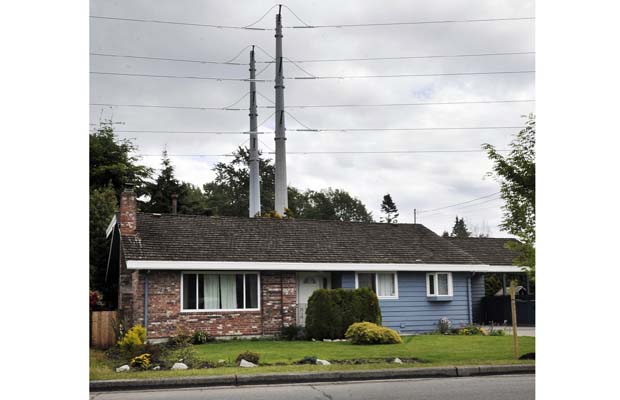 Newly-constructed electricity transmission lines above homes in Tsawwassen. (Photograph by: Ian Lindsay, Vancouver Sun) |
METRO VANCOUVER — BC Hydro will pay $62 million to purchase about 100 homes near a controversial Tsawwassen power line, a document filed by the Crown corporation reveals.
Hydro plans to resell the houses over at least two years and perhaps longer, the document said.
Hydro estimated that by the time the homes are all sold, its net cost for the buyout program will be $23 million.
“It’s almost like a capital program in that we acquire $62 million of homes based on estimated property acquisition costs,” B.C. Hydro spokeswoman Susan Danard said.
“That is offset over time by our sales,” she added.
Guy Gentner, the New Democratic Party’s MLA-elect for Delta North, was extremely critical, saying it would have cost about the same amount to bury the lines underground.
“They’ve bungled this from the get-go,” Gentner said.
In an e-mail Tuesday, BC Transmission Corp. spokeswoman Janet Stewart said it would have cost an estimated $24 million to bury the new lines. If BC Transmission had gone that route, she said, the old overhead lines would have remained in place until 2018.
“The BCUC [BC Utilities Commission] rejected this option, citing lack of community support,” Stewart said in the e-mail.
Energy Minister Blair Lekstrom could not be reached for comment.
Under direction from the provincial government, B.C. Hydro had been negotiating since January to purchase 104 homes from upset owners living directly adjacent to a new 3.7 kilometer high-voltage line.
The power project has sparked significant community outrage against the B.C. Liberal government, some of which factored into the recent election race in Delta South, where independent Vicki Huntington defeated Liberal Attorney-General Wally Oppal.
Consisting of 20 tall steel poles, the new power line replaced an older one with shorter wooden poles.
The new lines — which supply power to more than 700,000 customers on Vancouver Island and the Gulf Islands — transmit 230 kilovolts of power. The original lines transmitted 138 kilovolts.
Government approval for the project came after more than three years of public consultation, though many residents remained opposed to the project because of feared health effects of a high-voltage line, and because of the appearance of the project.
While homeowners began receiving offers for their homes earlier this year, it has not been known until now how much the entire program would cost.
Last Thursday, the utilities commission approved an application from Hydro that said it would spend $62 million to buy 104 homes — an average of $597,000 per house.
The filing said Hydro will spend an additional $20 million on financing and administrative costs, and to make energy efficiency improvements at some of the properties.
It said Hydro expects to resell the 104 properties for $59 million, meaning that after all is said and done, the exercise will have cost the Crown corporation $23 million.
Danard said Hydro is buying and selling the houses through another arm of the provincial government, and that the houses will not all be put up for sale at the same time to avoid flooding the market.
Danard added that while Hydro estimates it will take a $3-million loss on the actual sale of the houses — in addition to the $20 million for financing, administration, maintenance and other costs — she does not think there will be a problem selling the properties.
“We’re quite confident the homes will resell,” she said. “They’re nice homes.”
© Copyright (c) The Vancouver Sun
May 26, 2009
Valley airshed attracts pollution, power plants
By Brian Lewis
The Province
May 26, 2009
Councillor sounds alarm about fragile environment
 A smoggy view into the Fraser Valley from the lookout on Mt. Seymour. This image from 2000 shows how air pollution from the Lower Mainland settles downwind, into the valley beyond. (Photograph by: Wayne Leidenfrost file, The Province) |
Producing electricity within the high-demand Lower Mainland makes sense economically but can carry a high price environmentally.
That's particularly pertinent in the Fraser Valley. By virtue of its location east and downwind of Metro Vancouver, this isn't your run-of-the-mill valley airshed.
"Its geography creates a perfect storm of conditions where pollutants from Greater Vancouver flow into it, they become condensed by its funnel shape and are then blocked from flowing out by the surrounding mountains," says Patricia Ross, the Abbotsford city councillor who now chairs the Fraser Valley Regional District.
"So the polluted air often just sits there."
It's especially noticeable during the hot summer months. A thick haze often develops throughout the Valley, and while this can produce spectacular sunsets, it also produces what many consider a significant threat to health.
Ross is a longtime advocate for protecting the Valley airshed. But she admitted yesterday that, after having led a successful campaign several years ago to block construction of a natural-gas-powered electricity-generation project in nearby Sumas, Wash., she mistakenly assumed the battle had been won.
"I thought that people in the Lower Mainland had finally understood our concerns about the Fraser Valley airshed and its unique characteristics — but now I see that some of them still don't get it, so the fight continues," she notes.
It also continues to revolve around our desire for a nearby, adequate supply of electricity.
The FVRD's immediate concern is Metro Vancouver's plans to solve its garbage-disposal problem — thanks to the approaching capacity closure of Cache Creek in the Interior — by building up to seven waste-to-energy electricity-generation plants in the Lower Mainland.
In fact, the developers of this technology have done an admirable job in convincing many within Metro Vancouver that these power plants don't pollute.
For their part, some of these politicians have been gullible enough to accept the industry at its word.
Now I see that four Metro Vancouver directors are in Sweden this week being wined and dined by the waste-to-energy industry to "learn" more about the technology.
Boy, I bet that'll be an unbiased learning experience.
Meanwhile, those trying to protect the Fraser Valley airshed now face a possible second assault.
It comes courtesy of B.C. Hydro's desire to spend a reported $900 million to refurbish the 50-year-old Burrard Thermal Generating Station in Port Moody.
Hydro is pushing to keep the natural-gas-fed backup power station running for many more years, rather than looking farther afield.
"Those who want to add these pollution points simply don't understand the Fraser Valley airshed issue," a frustrated Ross said. "Obviously, we've got more work to do in getting our message out."
If you have a story idea or noteworthy item about anything going on in the Fraser Valley, you can e-mail Brian at blewis@theprovince.com
© Copyright (c) The Province
Hydro seeking an overhaul of 'cornerstone' power plant
Scott Simpson
Vancouver Sun
May 26, 2009
BC Hydro says it needs to spend $386 million replacing turbines
 Driven by the power of water pouring out of the Williston Reservoir high above, this shaft spins the rotor above it to create the electricity that flows south from the Peace River. Hydro is proposing to spend hundreds of millions to replace the aging infrastructure. (Photograph by: Ian Lindsay, Vancouver Sun, Vancouver Sun) |
The "cornerstone" generating station in British Columbia's electricity system is in "poor health" due to the age and risk of failure among its oldest turbines.
BC Hydro says it needs to spend up to $386 million to replace half the original turbines installed 40 years ago at Gordon M. Shrum generating station on the Peace River, alongside W.A.C. Bennett Dam.
Shrum accounts for 30 per cent of the electricity Hydro produces each year, and the relative health of the facility "has an impact on the security of the province's electricity supply," according to a Hydro newsletter this month.
Hydro wants to replace Shrum's five oldest turbines -- a total of 10 were installed between 1968 and 1980 -- with new, more efficient custom-built units.
It may eventually seek a new water licence to support expanded power production capacity -- an action which could push Hydro into a full-blown environmental assessment of the massive, 2,730-megawatt facility.
"Thirty per cent of anything we produce comes from GMS," Hydro media relations manager Susan Danard said in an interview. "This is the first major refurbishment or replacement of the turbines since it was built."
Hydro is already undertaking a number of updates at Shrum, worth a total of $190 million.
A major turbine overhaul will require approval of the B.C. Utilities Commission because the value of the project exceeds $50 million.
"The project is being undertaken to ensure ongoing reliability, availability and operational flexibility of these units," the Crown corporation says.
Last year, Hydro senior vice-president Chris O'Riley testified at a hearing before the utilities commission that Hydro's 80-year-old Ruskin generating station on Stave River near Mission was held together with "tape and twine" and was one of a number of Hydro heritage assets in need of modernization.
O'Riley, who was out of town and unavailable for comment on Monday, told The Vancouver Sun in an earlier interview that the Crown corporation has added 430 employees in the past two years in preparation for accelerated renewal of the system.
At Shrum, Hydro proposes to replace one turbine each year beginning in
2012 -- keeping the rest of the station operational and providing electricity for B.C.
Two companies, Voith Siemens Hydro Power Generation and Andritz Hydro Power Canada, are currently doing design and modelling work, but a single turbine manufacturer will be announced next year.
"It's not a done deal," Danard said. "We have to go to the commission because it is a significant investment. But we do feel we have a good rationale for doing it. To a large degree it is just aging components.
Reliability is a concern. We want to make sure that we keep this facility up and running.
"There was a time when Hydro was on the move, building lots of things under W.A.C. Bennett, and we would argue that in a way this is a little renaissance. We are not building new facilities necessarily, but it's a significant overhaul. We are rehabilitating a facility that has been a cornerstone of our generating system for more than 40 years."
GORDON M. SHRUM GENERATING STATION
- A cornerstone of the BC Hydro system, located next to W.A.C. Bennett Dam on the Peace River in northeast B.C.
- The single largest source of power in the BC Hydro system, accounting for 30 per cent of Hydro's annual electricity production.
- Maximum sustained generating capacity of 2,730 megawatts.
- The first generating five units, which Hydro wants to replace, were installed by 1968, and all 10 at Shrum were in service by 1980.
- Estimated cost to replace the five units is between $243 million and
$386 million.
- Current capacity: 261 megawatts per turbine; proposed capacity: 305 megawatts.
- New efficient turbines will allow Hydro to generate more electricity -- 120 to 210 gigawatt hours per year, or enough to meet consumption of 11,000 to 19,000 households -- without using more water.
May 22, 2009
B.C. Liberals show a paler shade of green
Chris Genovali,
Special to Times Colonist
May 22, 2009
Idea that Liberal victory was due to climate policy is just plain silly
Reflecting on the noise of the just concluded provincial election, an amusing turn of phrase that appeared on the American political blog Firedoglake.com comes to mind: "Yea, Though I Walk Through the Valley of Dumb, I Shall Fear No Idiocy."
The pithy title of a commentary on the truly bizarre reaction amongst the U.S. right-wing to the nascent presidency of Barack Obama, it seems more than appropriate as a summation for what has just occurred in British Columbia.
According to the punditry and analysis by some media commentators and environmentalists, the B.C. Liberals' three-peat can be, in part, attributed to support for their climate change policy, specifically the carbon tax.
One has to wonder whether this particular post-mortem spin is due to the general facileness of election reporting, an inflated sense of influence endemic to certain activists or simply wishful thinking.
To paraphrase Cuba Gooding's character in the movie Jerry Maguire, show me the polling!
An April poll done by Robbins Research concluded that 37.5 per cent of the survey respondents supported the carbon tax, while 50.5 didn't support it and 12.5 per cent were undecided.
This wouldn't appear to bolster claims by media and environmental pundits that the carbon tax played a formidable role in the election.
Likely, a more realistic assessment of the outcome on May 12 is that the B.C. electorate voted for the status quo as a result of fear and anxiety about an uncertain economy, coupled with a lacklustre campaign by the official opposition.
Examining the B.C. electoral map, it is evident that the relatively few
(small-l) liberal and pro-environment enclaves of the province went to the NDP.
The notion that the principally conservative regions of the Interior and Fraser Valley, as well as the swing ridings in the Lower Mainland, were delivered to the Liberals because of some sort of overriding concern for the ruling government's climate change action plan might be the silliest the "silly season" has had to offer.
It's regrettable the carbon tax became such a political lightning rod during the election as it diverted attention from the real issues at hand such as substantively addressing climate change, protecting the coast from a potential Exxon Valdez-style disaster and halting the decline of the lifeblood of B.C.'s coastal ecosystems -- wild salmon.
Yes, B.C. does need a carbon pricing system, but one that is aligned with a suite of policies and initiatives that work in concert, not in contradiction. The fact remains there is a stark disconnect between the government's implementation of the carbon tax and its continued support for intensive fossil fuel development.
Backing everything from offshore oil drilling to coalbed methane development, the province is also pushing for the revocation of the 35-year oil-tanker moratorium on B.C.'s coast and the construction of the Northern Gateway pipeline into Kitimat. These are not the stances of a government that is serious about tackling climate change, not to mention being highly inconsistent with the stated intention of the carbon tax.
Government has a wide range of potential carbon-reducing tools at its command, including cap and trade regimes, taxes on fuels, management of forestry and agriculture, regulations on power generation and energy efficiency, and subsidies for renewable energy and improved technologies.
As essential as it is, however, reducing emissions will not be enough. The fossil fuels burned up so far have already committed the world to a serious amount of climate disruption, even if carbon emissions were somehow to cease overnight.
The latest scientific research suggests that even a complete halt to carbon pollution would not bring the world's temperatures down substantially for several centuries.
On her Zero Carbon Canada blog, Tzeporah Berman states that "Canadians dodged a bullet in the B.C. election. B.C. will not be rolling back...carbon pricing."
One is reminded of the old saw, be careful what you wish for.
The price to be paid for dodging the "axe the tax" bullet is that British Columbians now have the equivalent of an intercontinental ballistic missile pointed at their collective heads with Premier Gordon Campbell's "energy corridor" plan about to be unleashed on a largely unsuspecting citizenry. Regarding the proposed industrialization of the coast, don't be surprised when the government tries to "turn up the crazy and break off the knob," as Stephen Colbert is wont to say.
Having put an inordinate amount of emphasis on rescuing the carbon tax, the environmental movement in B.C. comes out of this election a paler shade of green as it just might have cut off its nose to spite its face.
Chris Genovali is the executive director of Raincoast Conservation.
May 21, 2009
Campbell's carbon tax may go way of dodo
Michael Smyth
The Province
May 21, 2009
U.S. likely to go for cap-and-trade, just as NDP proposed
The front page of last Sunday's New York Times contained a story sure to
annoy anyone who thinks Gordon Campbell's carbon tax is a bold stroke of
environmental genius.
The article looked at President Barack Obama's policy approach to global
warming and how his administration plans to curb the emission of
greenhouse gases that cause it. (Here's a hint: It's not with a carbon
tax.) Obama favours the "cap-and-trade" model, where the government places
a ceiling on emissions and allows polluting industries to buy and sell
permits to meet it.
"Cap-and-trade has been embraced by President Obama, Democratic leaders in
Congress, mainstream environmental groups and a growing number of business
interests, including energy-consuming industries like autos, steel and
aluminum," the Times reported.
And while cap-and-trade rules the White House, the Obama administration
has effectively ruled out a carbon tax for the U. S., the article said.
Why? Politics, mainly. When then-president Bill Clinton proposed a
national energy tax back in the 1990s, the idea went down in flames and
the Democrats lost control of Congress. Cap-and-trade, by contrast, is
more politically salable. It has a proven U.S. track record, too, helping
stop the environmental scourge of acid rain.
So where does all this leave little old British Columbia and Campbell's
precious carbon tax? Out in the cold. The carbon tax is now effectively
dead, south of the border. And if cap-and-trade becomes a reality in the
U.S., Canada will surely follow suit, snuffing out any more carbon-tax
brainstorms here as well.
In other words, British Columbia will be going it alone with a carbon tax,
while the rest of North America takes a different path in the fight
against global warming.
Is it any wonder Campbell now says he might strangle his own carbon-tax
baby in the cradle? In one of the great under-reported stories of the B.C.
election, Campbell revealed the carbon tax will be reviewed in 2012 and
might be frozen in place at 7.24 cents per litre of gas and not rise any
further.
"A lot of environmentalists want it to keep going up," Campbell told me on
the campaign trail. "I think you have to find a balance. It could go up or
you could leave it as it is." But wait: Isn't the whole point of a carbon
tax to keep jacking it up every year until people stop burning those evil
fossil fuels? Even Campbell's own climate-change adviser, economist Mark
Jaccard, says the tax must rise to 24 cents a litre and higher over a
decade and beyond to be effective.
But Campbell told me that may not be necessary, if cap-and-trade does the
same job anyway. (Read more of the premier's comments at my blog, address
listed below.) The irony here is that this is exactly what NDP Leader
Carole James was arguing when she promised to scrap the carbon tax in
favour of cap-and-trade. She was vilified for doing it while Campbell was
hailed as some kind of visionary.
My prediction: As cap-and-trade becomes the standard for North America,
Campbell's carbon tax will be frozen and forgotten, though it will have
served its political purpose of softening his hard-edged image.
Learn Victoria's Secrets at www.theprovince.com/smyth
The Green Rift
By Jesse Ferreras
Pique Newsmagazine (Whistler)
May 20, 2009
Has the Environmental Movement Been Torn Apart?
 |
The Istken Hall is buzzing.
Whistlerites, Pembertonians and students from Quest University have packed the small hall at Whistler's Squamish-Lil'wat Cultural Centre. The mayors of both towns are in attendance, as are numerous councillors.
In Lil'wat tradition, an Istken Hall is a traditional earthen pit house and place of respect where anyone in attendance gets their chance to speak without interruption.
On this night, the eve of Good Friday, not everyone's here to show respect. People are sharpening their verbal knives as they wait to form an audience with Tzeporah Berman.
In another time and place such a gathering would be taking place at a peace camp on the side of a highway near Clayoquot Sound. Berman would be musing to an enraptured audience about the importance of coastal rainforests as police arrived to arrest her.
Today it isn't police who are after her - it's former supporters who once considered her their Messiah and now see her as a green Judas.
In the midst of her talk, Berman shows a graph charting out B.C.'s energy needs leading up to the year 2030. Her voice quivers as she tries to convince her audience that B.C. won't have all the power it needs by then.
"Even if we doubled, tripled, quadrupled our conservation and efficiency plans that we have today, we couldn't meet that gap. We couldn't get off fossil fuels," she says.
In the second row an activist with the Association of Whistler Area Residents for the Environment (AWARE) snickers, wholly unconvinced of what Berman has presented.
It's clear there's a split in the audience - some are on board with Berman's support for initiatives such as a carbon tax and run-of-river hydro, while others see her as a traitor for supporting policies championed by the B.C. Liberals.
The split is a symptom of a greater rift in B.C.'s environmental movement - one exacerbated by a recent B.C. election that has fractured it along ideological lines.
Election 2009
How did it come to this? How did a movement to save the planet devolve into a Monty Pythonesque battle reminiscent of the Judean People's Front vs. the People's Front of Judea - too engaged in internal fighting to take on a common enemy?
Gone are the days that environmentalists hiked together across the Stein Valley to protest a logging road. No longer do British Columbians witness the unity that drove tree-lovers to take up residence in the woods of Clayoquot Sound and the Elaho.
Such displays have been replaced by struggles between different environmental groups to co-opt the issues from each other as the proper stewards of the environment in British Columbia. There is common ground on many areas, but a yawning chasm on the issues is making headlines today.
Reasons for the split cited by some of B.C.'s most prominent environmentalists point to people and events revolving around the recent election - one that differed vastly from those that came before. In the 2005 election the environment barely figured as an issue.
A search of the news archive for CBC's "B.C. Votes 2005" website doesn't turn up a reference to the environment in a single headline. The only time the word "Green" appears is to announce the failure of the party to gain a seat.
A search of the Vancouver Sun's 2005 archives yields a similar result. The environment figures as an issue in some ridings but doesn't hit the news stream with the same fervour as it does today. No mention of a carbon tax, cap and trade or green energy.
Back then, and in years previous, the environment simply didn't play as an issue the way it does now. Where once the operative words in B.C. politics were "jobs," "health care" and "Fast Ferries," today "carbon tax" and "run of river" have been added to the fray.
Gordon Campbell, it should be said, didn't exactly jump on the environmental file as soon as he took office in 2001. Back then he changed the Ministry of Environment to the Ministry of Air, Land and Water Resources - the ministry of "Earth, Wind and Fire" as some activists derisively called it.
He appointed New Westminster MLA Joyce Murray in charge of the file, and interviews suggest her ideas didn't always gel with cabinet. In a 2008 interview with the Ubyssey she said the government "wasn't convinced" that the environment was a top priority at the time - at least not big enough for Campbell's Liberals to support Kyoto.
Today, things have changed. Al Gore's documentary "An Inconvenient Truth" unleashed a Pandora's Box of fear about climate change in 2006 and even the Premier signed on. The 2007 Speech from the Throne announced Campbell's intention to bring B.C.'s emissions to 10 per cent below 1990 levels by 2020.
That commitment was followed months later by a "magical mystery tour" that brought Arnold Schwarzenegger to B.C. The two signed a memorandum of understanding to significantly reduce emissions and build a "hydrogen highway" from B.C. to Baja California.
Green hit the mainstream and British Columbians were stunned. Barbara Yaffe at the Vancouver Sun called them an "environmental odd couple." Alan Ferguson at the Province said Schwarzenegger had won his respect - and that he'd take him any day over a "sackcloth-and-ashes brigade of breast-beating enviro-fanatics."
The Patrick Moore factor
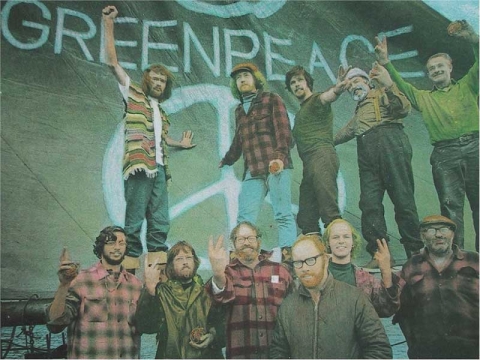
Gordon Campbell's about-face on the environment ultimately helped him take the issue away from such fanatics, according to Patrick Moore, a co-founder of Greenpeace and now an environmental consultant.
Moore, it should be said, has endured a split of his own with the environmental movement. While a student at the University of British Columbia (UBC), where he once studied under then-genetics researcher David Suzuki, he took part in massive protests that accompanied a campus visit by Jerry Rubin, one of the "Chicago Seven" and an outspoken opponent of the Vietnam War.
It was a turbulent time at UBC, where he went on to earn a PhD in ecology.
Students occupied the University's Faculty Club in numbers that wouldn't be matched until the APEC protests in 1997 - and Moore was among them. Radicalized academics jam-packed Suzuki's lectures to hear him go beyond genetics and into issues such as the war and racism in America. He was a key influence on students at the time - including Moore.
"A lot of the professors rejected the revolutionary sort of element within the University," he says. "David made a point of reaching out and speaking to us, those of us who were becoming radicalized because of the war in Vietnam. He was always very personable."
Caught up in a radicalized atmosphere, Moore found his way into the environmental movement through the Don't Make a Wave Committee (DMWC), which went on to become Greenpeace.
Moore joined the group in the spring of 1971 as part of a campaign to protest bomb tests in Alaska's Aleutian Islands. He was one of 12 people to sail the first boat north to Amchitka Island, a national wildlife refuge that was slated for an underground nuclear test by the U.S. Department of Defence.
The group worried that the tests could create a tidal wave similar to the 17-foot monster just five years earlier that rocked Seward, Alaska and much of the Gulf Coast.
Moore, a member of the first group to directly confront the tests, later helped organize a campaign against atmospheric testing in French Polynesia in 1973, and claims he played a role in all the Save the Whales campaigns in the Pacific.
"If you'd ever seen one killed you would never want to see one killed again," he says. "It's impossible to do it humanely. They drive a grenade into the backbone and blow it up. And then they spend half an hour to an hour suffering and dying."
In 1975 he and some fellow activists made history when they sailed into San Francisco harbour after confronting a Soviet whaling fleet off the coast of California. They returned intact with pictures of harpoons flying over their heads.
By then the DMWC had morphed into Greenpeace and began spreading its environmental fervour throughout the world - inspiring protests against Newfoundland's sealing trade and drawing celebrities such as Brigitte Bardot to their cause.
The sealing protests proved a turning point for Moore and his involvement in the environmental movement. It was the first place that the found his scientific background running headlong into Greenpeace's public message.
"One of our members was quoted in the media saying that the seals were in danger of extinction if the hunt continued," he says. "I knew that this was not true. I never thought that the seal campaign was about endangered species. It was about cruelty to animals, in particular about bludgeoning baby seals in front of their mothers while they're still nursing."
Greenpeace members eventually took Moore's advice about contextualizing the hunt within the issue of endangered species, but he had another fight coming - this time over chlorine.
Fellow directors on the Greenpeace board, of which Moore eventually became a member, wanted to start a global campaign against chlorine. They wanted a global ban on the substance for a variety of reasons, among them that it had been seen to cause sterility in mammals.
For Moore, it was foolish to try and ban a chemical that could help give people clean water.
"Where I finally lost the argument was over the subject of chlorine," he says. "My fellow directors, none of whom had any formal science education... they would not take my advice that chlorine was very important in medicine and very important in public health and they said ban chlorine worldwide.
"I know that if we were to ban chlorine in drinking water you would have cholera epidemics breaking out."
Moore officially left the organization in 1986 and says it has since adopted more campaigns he doesn't agree with. Since departing the organization he's gone on to work as a keynote speaker on environmental issues and as a sustainability consultant with Greenspirit Strategies - a firm he started in 1994.
In his new guise he's done work with various industries such as energy, plastics and forestry - drawing his own comparisons to Judas Iscariot in the process. He's also become a kind of pundit on the worldwide environmental movement.
In that role he's contradicted the advice of Greenpeace not to use soft toilet paper. He's advocated for nuclear power. But more than anything, he's lambasted activists for mounting "fear-based" campaigns about global warming.
"Many environmental campaigns are based on fear," he says. "Climate change, again, words like catastrophe and apocalypse, the collapse of human civilization, this is sensationalism.
"There's no evidence to show that that's going to happen. As a matter of fact right now the climate doesn't seem to be changing. Since 1996, there hasn't been any evidence the climate is changing."
When asked about the state of B.C.'s environmental movement, Moore says that Gordon Campbell has successfully co-opted the issue from the left, particularly with regard to the carbon tax and run-of-river.
"Gordon Campbell has done an amazing job of end-running the political left and the environmental movement on these two issues," he says. "A big part of the split is that environmentalists that are staunchly NDP just can't stand the fact that (David) Suzuki and (Tzeporah) Berman and others are supporting what is essentially the Liberal side.
"I believe there are people who would traditionally be called NDP who are not necessarily leaders of the environmental movement but who agree with Berman on the carbon tax."
Today Moore feels that there's a strong desire for scientific analysis of environmental issues but his split with the movement remains in place - disgusted as he is with the "fear tactics" of certain activists raising awareness of global warming.
"I'm all in favour of clean air, water and good food," he says. "I so strongly disagree with using irrational fear as a basis for these campaigns."
The disillusionment of Tzeporah Berman
Moore's split from the environmental movement has a loose parallel with that of Tzeporah Berman, the fiery co-founder of ForestEthics and leading voice of the 10,000-strong Clayoquot Sound protests.
In the past election and prior to that she took up a different kind of prominence. Where once she pressured the government to protect coastal rainforests, today she's defending its politics. She says that people mounting blanket opposition to run-of-river hydro are effectively doing the lobbying work of the fossil fuel industry.
As executive director of PowerUP Canada, a citizen's initiative that's drawn the support of four Canadian Prime Ministers, she's pushing for better policies at the government level but some activists won't even attend her conferences. At her talk in Whistler she related a furor that erupted over comments she made on CKNW's Bill Good Show.
"Bill Good said, 'What do you mean by green stimulus and what do you mean by green jobs?'" she told her audience. "I said two sentences about how we need to rethink our opposition to run-of-river and that we have to figure out how we can support the expansion of renewable energy in this province."
That set them off - anonymous callers who rang her phone off its hook. Calls that brought death threats against her and imploring her to "watch your family."
"I had people saying to me, as an environmentalist you cannot speak out opposite to other environmentalists in this province," she said. "I was like, I'm sorry, I thought I was part of a movement, not a cult!"
Berman's journey towards environmentalism came on a trip to Europe in 1989. At the time studying fashion design at Toronto's Ryerson University, she caught jet set fever after her first year and wanted to take in some ancient ruins.
While backpacking in Greece she visited Athens at a time when air pollution as at an "all-time high."
"I was so excited about seeing the Acropolis," she says. "People were dropping like flies in the street. I remember going back to my hostel that night and coughing up black."
Hoping to do some hiking, she and her travel-companion sister picked a random place on a map and landed on Germany's Harz Mountains as their next designation. It provided no respite from Greece's black air.
"I wake up in the morning to go hiking and find out that we're surrounded by forests that are dead," she says. "They had all died as a result of acid rain and they'd been left standing by the government as a testimony to the impacts of industrial civilization."
Berman yearned to come back to Canada where she could be surrounded by intact wilderness again. Once back in school she started taking courses in environmental studies at the University of Toronto. It was there that she first learned about temperate rainforests and began gravitating towards environmentalism.
The following summer she started backpacking throughout British Columbia and signed up as a volunteer with the Western Canada Wilderness Committee (WCWC). While with the WCWC she lived in the Carmanah Valley on Vancouver Island, helping the organization research clearcut logging in B.C.'s forests.
"I fell in love with B.C.'s rainforests," she says. "(I) really admired (the WCWC's) work in supporting the scientific research that was going on there and raising public awareness about the impacts of clearcut logging on old-growth forests."
Berman's stint with the WCWC left a heavy impression on the budding environmentalist - she would bloom just two years later as a "blockade coordinator" for the "Sons of Clayoquot Sound."
She first arrived in Clayoquot Sound, on Vancouver Island's west coast, in 1992. There she later took up residence in a "peace camp" on the side of a highway as part of a massive protest against the logging practices of MacMillan Bloedel.
Mike Harcourt, B.C.'s NDP premier at the time, permitted logging in 33 per cent of the 262,000-hectare rainforest near Tofino - a rare entity in the world. Harcourt thought he could appease environmentalists by allowing logging in only a cross-section of the forest.
Environmentalists responded in kind in the summer of 1993. They launched road blockades. They started "tree-spiking" - literally hammering nails into trees to damage sawblades and chainsaws.
856 people were arrested - and Berman, a chief spokesperson for the protesters, was among them. She was taken off the side of a highway while giving a speech, but today she can't remember the charge.
From there Berman gained more influence in the movement. She helped draw the boundary for the "Great Bear Rainforest" to help keep it off limits to logging. She led boycotts against corporations like Victoria's Secret to stop them using non-recycled paper for their catalogues.
With ForestEthics, a firm she co-founded, she made clients out of environmental enemies such as Dell, Estee Lauder and Hewlett-Packard, helping them adopt more sustainable practices. She realized early on that protests alone wouldn't make a difference.
Her collective experience as an environmentalist won her an appearance in Leonardo DiCaprio's documentary "The 11th Hour" and brought her to Hollywood premiere parties where she'd stand beside the likes of Paris Hilton.
Today, however, Berman finds herself standing with a chorus of environmentalists who've broken with those who remain dogmatically opposed to government policies.
Upon launching their platform in which they promised to axe the carbon tax, the NDP faced a major attack at a single press conference from three prominent environmental groups: the David Suzuki Foundation, ForestEthics and the Pembina Institute - three of 16 groups that lauded the carbon tax when it was first released.
Pembina called the promise to axe the tax a "step backward" for climate action. David Suzuki warned that if the NDP got rid of the tax, future politicians would consider it poison at the polls.
Berman's reprisal came four days later. In a front page story in the Vancouver Sun, she renounced her membership in the NDP.
"You have put politicking before the planet in the most hypocritical fashion," she wrote in a strongly worded e-mail to NDP leader Carole James. "I have had to watch the embarrassing display as you pulled a 180 on your earlier strong positions to the reactionary ones you advocate now."
James largely laughed off the reprisals, telling reporters that "We certainly agree to disagree with the environmental movement."
Berman certainly agrees there's a split in the environmental movement, but challenges the notion that it's somehow broken with the NDP.
"I would say it's not true that the environmental movement has always rallied behind the NDP," she says. "I think it's fair to say that traditionally, the environmental vote has always gone to the left.
"I would say that it's the first time that so much environmental criticism has been targeted at the NDP."
As for the split in the movement, Berman thinks there's more a split in the NDP. People within the party, she says, have been calling her to say that they didn't support the move to "axe the gas tax," as James put it.
That assertion finds agreement with Andrew Weaver, a professor of Earth and Ocean Sciences at the University of Victoria.
"I actually do not think there is a split in the environmental community, I think there is a split in the NDP," he says. "There are those within the NDP who are opposed to private electricity production and there are those who are concerned about the potential loss of union jobs. Rather than dealing with those issues up front, they're greenwashing them and claiming there's an ecological problem."
Joe Foy finds common ground
Not everyone in the environmental movement has turned against the NDP. The WCWC, for example, supports the carbon tax but feels the B.C. Liberals have their policies backwards on other issues.
Joe Foy, the WCWC's national campaign director, says his group didn't join the chorus condemning the NDP platform for a number of reasons: first off, they weren't asked to attend the press conference. Secondly, they wouldn't have gone if they were asked because there's a host of other issues they're focused on.
"We wouldn't have focused strictly on that issue," he says. "We're kind of pissed off about a whole variety of issues."
Chief among them is run-of-river hydro. Together with Rafe Mair and the Save Our Rivers Society, the WCWC ran a kind of province-wide counter-campaign against the B.C. Liberals and run-of-river projects.
The WCWC feels that having private corporations run the projects amounts to "privatizing" B.C. rivers, leading to a "gold rush mentality" in which corporations are snapping up claims to the province's streams.
It's a message that came to Whistler's Spruce Grove Field House just a week before Berman's talk. Foy stood before a sparse audience with Mair, a former MLA and long time radio host who's found a second calling as an environmentalist. Foy stood with him as he charged that IPP's are "bribing" First Nations into supporting the projects.
He later stood with Carole James on the campaign trail as she defended her party's environmental policies, telling the Province that he was disappointed with her stance on the tax, but nevertheless cheered her on because the Liberals were "sucking up" to industrial polluters.
Foy, a participant in the Stein Valley protests in the 1980s, agrees there's a split in the environmental movement today but unlike Moore, Berman and Weaver he doesn't think it's solely the NDP's doing.
"Every decade that I've been involved, the number, variety and capability of environmental groups in B.C. has been growing," he says. "When that happens, I think this is just a natural outflow of that."
But what of the public divisions? What of Berman saying that groups like the WCWC are working in tandem with the fossil fuel industry? And what of other environmental groups coming forward and denouncing the NDP as weak stewards of the environment?
Foy seems to take it in stride.
"Frankly, I still think they're more banded together than not," he says. "The nature of the work we choose for ourselves is stressful... You choose to put yourself into environmental battles and it's therefore good practice to maintain good relations with your partners."
What about PowerUP Canada? Are they still partners?
"PowerUP Canada? No," he says. "PowerUP Canada is in a very different place... We perceive PowerUP Canada as very small, very fast. It has bumbled into a very wrong place right now."
With the election over, what's left for the WCWC? Run-of-river is still being developed across the province and members are still likely to flood the meetings for each project.
Foy says the WCWC supports a "revamped" energy plan that would ensure each project is planned, publicly-owned and "environmentally-appropriate" - in short, they want the repeal of Bill 30, which stated that regional governments cannot veto a public utility.
The WCWC would also like to see more conservation measures such as ground-source heat pumps - and doing it from the ground up, before new development happens.
And what of the environmental movement? Can the split be healed?
"That depends on your perception of how badly it's been split," he says. "I'm a great believer that the reason there is an environmental movement here is we have this western democratic society which says that just because you have a contrary idea that you voice, you're not insulting anyone.
"I debate and argue as strong as the rest of them, but I sure as hell don't say that people don't' have the right to say what they think."
The Sea to Sky split
Closer to home, the environmental rift is as evident as anywhere. Events such as the controversy around the Ashlu Creek project have brought the IPP issue to the fore in the Sea to Sky corridor. They have also highlighted a split between two very different kinds of environmentalist.
Pemberton-based scientist Nigel Protter considers environmentalism to be the cornerstone issue that has dominated his life - though not, perhaps, in the mainstream sense.
Protter first moved to Whistler in 1978 - he and a friend built a cabin in the woods off Westside Road. They lived "off the grid" and developed their own power, according to him. Until 1981 he operated the "Espresso Express," a cappuccino bus that was the first business in Whistler Village.
Three years after that he was working as a ski patroller on Whistler Mountain with current Mayor Ken Melamed. Protter recalls them having a discussion about how each would change the world.
"We both felt at the time that we were going to do something about making the world a better place," he says. "(Ken's) whole position was one of activism and kind of shaking it up from the outside. I said, you know Ken, my position is I'm going to shake it up from the inside. I'm going to educate myself and improve the system from within."
Protter got his first exposure to "Green power" when he paid a visit to Oscar Berube, a Sea to Sky pioneer who homesteaded a piece of land between Squamish and Whistler. He had his own hand-built powerhouse at his house at Culliton Creek.
There was an intake and electrical system that harnessed the power of a river to generate electricity for his home. He had a sheet of clear glass in the floor that allowed people to see what was lighting his house.
Protter was transfixed.
"He powered himself and you had to leave your lights running all the time," he says.
Berube's home power station was something that stuck with him - 14 years later, after moving to Pemberton, he joined a community advisory committee analyzing development of a geothermal plant on Meager Creek. Later a hydro project broke ground on the Soo River and Protter wanted a piece of the action.
"I realized the green power revolution was verging upon us in B.C. but there didn't exist a single person with a local's perspective that actually had a voice within the industry," he wrote in a submission to Pique this year. "I decided to become one."
From there he began renting out his family's home in order to pursue an MBA at Simon Fraser University focusing on sustainable development. Living between a camper van and a converted barn outside his family home, he spent two years studying energy policy in jurisdictions throughout the world.
Much of his research culminated in a 203-page industry analysis that observed the private sector was primed to stimulate a sustainable energy industry in B.C. It predicted that the move to "independent power production" (IPP) would allow "universal access" to the province's transmission and distribution infrastructure.
From 2001 to 2003 he served as "green power champion" for the Independent Power Producers Association of BC (IPPBC), helping to advance "green power policy" within the province. He also served as the representative for the energy sector during community consultations towards the Sea to Sky Land and Resource Management Plan (LRMP).
It was around this time that a public outcry began to erupt over the Ashlu Creek project in Squamish. Area residents and environmentalists worried that putting a project on the pristine river could knock over trees and deny recreational passage for kayakers.
Ashlu consultations were a catalyst for a jump in popular sentiment against IPP's, at least within the Sea to Sky region. People came to see the projects as intrusions on public resources - especially after the province used Bill 30 to override a local government's ability to veto them, regardless of public sentiment.
It sparked a furor that later carried over to a project slated for the Ryan River north of Pemberton. Protter is a consultant to developer Regional Power, and he says he's helping them design a project that will be "the world's best example yet of sustainable hydropower" - in effect, his magnum opus until he does something bigger.
Like the Ashlu, the project has met with considerable opposition from environmentalists within the corridor. Some worry it will impact a grizzly habitat - others oppose it for the same reasons they would any other project.
Sara Jennings, president of the Association of Whistler Area Residents for the Environment (AWARE), told the province's Environmental Assessment Office (EAO) that all IPP's should be stopped until a "comprehensive study" could be done to see which rivers are best-suited for the projects.
Other AWARE members have noted their ideological opposition to privately-run projects and the possibility that electricity could be sold to the United States.
It's a position that has put Protter and AWARE into a headlong conflict over whether IPP's are the right way to give B.C. its electricity. Protter thinks they're an essential part of feeding power-hungry customers on the Western Interconnect. AWARE thinks they're an environmentally careless way to get electricity.
"There's an environmental movement of people who know nothing about much," Protter says. "Then there are environmental engineers and people who are doing things for the environment. That's not a movement, that's a calling and a career."
Nowhere was the split between Protter and AWARE more evident than in early April, when he sent association members a news release announcing funding for a wave energy project he was working on.
Pina Belperio, a Whistler activist and former AWARE director, sent him a simple response - "FU," ostensibly meaning "f*** you."
Speaking in an interview in mid-May, Belperio doesn't deny that's what she meant but said she did it because she didn't want to receive Protter's e-mails.
"Normally you ask to be on people's e-mail (lists), I don't appreciate receiving unsolicited e-mails," she says. "Maybe that's his way of trying to get me to see the light. Religious people tend to do the same thing."
Protter and AWARE both want to create a more sustainable world. Why, then are they fighting?
"I think we actually agree on a lot of things that might not always have been seen on the outside," Jennings says in an interview. "We have had Nigel present to our group before and I've had conversations with him. We have different points of view on some things and similar points of view on others.
"He's doing what he's doing because he believes it's the right thing to do, and the same with us."
And Pina?
"Nigel believes passionately that his ideas are right and we believe that our ideas are right," Belperio says. "I think we have to work together is what it comes down to, not that we're going to agree on everything."
As for Protter, he thinks that many within the environmental movement ought to take science more seriously. He rejects a dogmatic approach to IPPs as he's observed within Sea to Sky and elsewhere.
"Most developers I know are responsible," he says. "They're socially-responsible and they want to do the right things. They may not know exactly how to do the right things and there's people like me who know a few things about how to do it right."
The aftermath
The electoral dust has settled over British Columbia. Election signs have been cleaned off sidewalks and streets, save for a few stragglers that remain. The B.C. Liberals and their environmental policies have been re-elected with the same level of confidence as they were in 2005.
The NDP remains a sizable opposition but its environmental positions undoubtedly lost them a few "green" voters aside from the ones who went public.
What happens next for the environmental movement? Andrew Weaver thinks efforts towards transforming the energy sector and implementing the carbon tax ought to be supported - both things the NDP opposed.
"The NDP are just, 'let's start all over again,'" he says. "The climate system doesn't have time to do that, thank you very much."
Others associated with the environmental movement have had their ideas internalized by the government. Tzeporah Berman and Patrick Moore now champion the government's efforts, as does David Suzuki - but none of them blindly.
Where the split remains, it seems, is in how to approach climate change. There remain unresolved questions as to whether the carbon tax is punitive enough and to what degree the private sector should have a role in developing green energy.
Come what may, there can be no doubt that British Columbians have walked out of the dust into a brand new green world in their province. Who is right remains to be seen.
May 20, 2009
Letter from Guujaaw to John Carruthers (Enbridge) - Northern Gateway
John Carruthers
President of Enbridge
"Northern Gateway Pipeline"
In response to your letter dated April 29th.
You have invited us to attend a meeting in Kitimat on June 18 and 19, "to guide
the design, construction, and operations of the proposed project".
This project that you are proposing would necessitate the movement of tankers
through these waters on a daily basis, which of course, is of concern to us.
We are a people who depend on the health and well-being of the seas around us.
While we are not interested in helping you to 'design' this project, we
certainly will be involved in determining whether or not this project should
even be allowed.
Though we will not be attending, we invite you to come here and explain to our
people, why we should be expected to risk our way of life and our culture for
the sake of this project.
Thank you for your attention
Guujaaw
Native News North, Yahoo Groups
May 19, 2009
Police relieved at silence of pipeline bomber
By Jamie Hall
Edmonton Journal
19-May-2009
EDMONTON — One-hundred-thirty-five.
That’s how many days have passed since the Dawson Creek pipeline bomber last struck EnCana’s sour gas line near the tiny hamlet of Tomslake, 28 kilometres south of Dawson Creek, B.C., close to the Alberta-B.C. border.
The first three attacks took place in rapid succession last October, coming just days apart.
The last one, on Jan. 4, blew apart a wall of a shed housing a sour gas pipe.
Across the road from the targeted shed stood a house where a couple lived with their two young children, prompting police to label the attacks “increasingly violent.”
Since then, nothing.
Police have several theories about the silence.
“It’s possible that the suspect moved out of the area, it’s possible the suspect has just stopped,” said RCMP spokesman Sgt. Tim Shields on Tuesday. “At this point, we don’t know. It’s also possible that the bomber stopped because he — or they — feel they have made their point, or because they feel the police are too close to them.”
Regardless, police have maintained a significant yet slightly less visible presence in the community, continuing to conduct inquiries and follow up on leads, said Shileds.
That presence still includes members of the Integrated National Security Enforcement Team.
Shields said that leads have slowed to a trickle in the days since a $500,000 reward for information leading to the arrest of the bomber was first announced earlier this year.
Police still want to wrap up their investigation with an arrest, of course, but the cessation of attacks, however brief, is a welcome respite.
“It is good news that the explosions have stopped, of course,” said Shields.
“Our biggest concern was that someone was going to be injured, and to date no one has been, so that’s been a relief.”
© Copyright (c) The Edmonton Journal
Is Canada a petro-state or prosperous nation?
David Suzuki and Faisal Moola
Georgia Straight
19 May 2009
Imagine a Canada with an abundance of nature and wildlife, clean air and water, healthy citizens, and a prosperous economy. Sounds close to what we have, doesn’t it? But it may not be for long if we keep heading down the road we’re on.
Author Andrew Nikiforuk has argued that Canada is becoming a petro-state.
“Without long-term planning and policies, Canada and Alberta will fail to secure reliable energy supplies for Canadians, to develop alternative energy sources for the country, or to create valuable resource funds for the future,” he writes in his best-selling book Tar Sands: Dirty Oil and the Future of a Continent. Because of the response of Alberta to Pierre Trudeau's National Energy Plan, Canada doesn't even have a national energy plan.
The reality is that our government is putting all its eggs in one basket, relying on the tar sands to fuel the economy. And although the government has at least come around to acknowledging that global warming is a problem, it hasn’t acted as if it’s a problem worthy of much attention.
Its energy and environmental policies show that it is willing to let the economics of the fossil fuel industry trump concern for our common future.
That was made clear with the release of an audit report by the federal environment and sustainable development commissioner on May 12. Scott Vaughan’s report found that the government has overstated expected reductions in greenhouse gas emissions, is unable to monitor actual reductions, lacks transparent plans, and is failing to meet its international obligations under the Kyoto Protocol Implementation Act.
The audit also found that the government is failing to adequately protect fish habitat. Vaughan charged the government with not knowing much about fish habitat in Canada, failing to implement some parts of the 23-year-old policy, and failing to even identify what it must do to stop harmful pollutants from being discharged into waters where the fish live.
This ongoing failure on the part of those elected to serve our interests is bad from both an environmental and an economic standpoint. A briefing note prepared for Natural Resources Minister Lisa Raitt last fall and recently obtained by Canadian Press warns that a lack of clarity and certainty regarding the government’s climate change policies is jeopardizing investment in Canada’s energy sector. The government promised new regulations more than two years ago but now says it is “reworking” its plan.
The briefing note says the government should have policies that facilitate investment in green equipment, buildings, and infrastructure.
But it appears that the government is really only interested in facilitating the ability of the fossil fuel industry to squeeze every drop of oil out of the ground until we are left with depleted energy supplies, devastated landscapes and polluted waters, and an economy that can’t compete with those of nations that have invested in renewable energy.
Our policies around oil extraction aren’t even that good. Mr. Nikiforuk argues in Tar Sands that, “Neither Canada nor Alberta has a rational plan for the tar sands other than full-scale liquidation.” With a more rational policy, he argues, “the tar sands could fund Canada's transition to a low-carbon economy.” Instead, “Feeble fiscal regimes have enriched multinationals and given Canada a petrodollar that hides the inflationary pressures of peak oil,” making Canada “nothing more than a Third World energy supermarket”.
It really is a case of short-term gain for long-term pain—and even the gain is only for a few foreign multinationals and their friends, and not for Canadians who should have more say in our energy future and in how our resources are managed.
And what about the long-term pain? Well, a recent report from the Lancet and the University College of London, Managing the Health Effects of Climate Change, notes that climate change is the biggest global health threat we face. The consequences include increased spread of disease as malaria-carrying mosquitoes move to higher altitudes, declining crop yields leading to food shortages, water shortages and illness related to poor sanitation, housing shortages, more extreme weather events such as flooding, and increased population migration.
And those are just the health consequences. Mass extinctions of animals and plants, dying oceans, and ravaged economies are also in our future if we don’t smarten up.
But it doesn’t have to be that way. In Canada, especially, we can still turn things around if we move quickly. Citizens across the country have been showing they care, by making changes in their lives to reduce their carbon footprint. Now it’s time to let our elected leaders know that we expect at least as much from them.
Take David Suzuki’s Nature Challenge and learn more at www.davidsuzuki.org/
NTL: B.C. power grid goes under the microscope
By Scott Simpson, Vancouver Sun, May 19, 2009
An inquiry is in the early stages of examining B.C.'s potential
The debate over independent power production in British Columbia did not end with the recent provincial election.
The B.C. Liberals loved it, the New Democrats hated it, and environmental groups were split.
Now, along with electricity exports and natural resource development, private power projects will be examined in the context of their ability to make a practical contribution to the provincial economy -- for the next 30 years.
The B.C. Utilities Commission, acting upon orders from the Ministry of Energy, is in the early stages of an inquiry into the the shaping of the province's economic future -- and to realize the Liberal's ambition to make B.C. electricity self-sufficient through the expansion of its high-voltage electricity grid.
The subject of the inquiry is the custodian of the grid, BC Transmission Corporation.
The contribution of private power to that future grid is a precondition of the inquiry -- as is the expansion of renewable power production in order to export electricity to markets in the United States.
The commission has also been ordered to advance plans for the development of transmission in northwest B.C., where mining opportunities abound -- and in northeast B.C., where the natural gas industry is on the cusp of an unprecedented boom.
The commission is constrained from making judgements on specific projects but it has the latitude to ensure that grid expansion is cost effective and orderly -- which could lead to delays or exclusions of private power projects that can't offer a simple and inexpensive connection to the grid.
The commission can also red-flag potential transmission routes where first nations interests are strong, or where new transmission lines would threaten provincial parks and environmentally sensitive areas.
On Thursday, the commission will announce its proposal for the scope and content of the inquiry which is not expected to wrap up until autumn 2010.
BCUC chair Len Kelsey compares the commission's task to the way Wayne Gretzky played hockey -- skating to where the puck will arrive, rather than chasing it around the rink.
So far, the commission has received 81 applications for groups and individuals seeking intervenor status in the inquiry, and a further 14 seeking "interested party" status. Registrants include first nations, power producers, mining and forest companies, conservation and environmental groups.
"Despite all the communications that have gone out announcing this, there's a fair number of people that probably don't even know about it yet. As we proceed ... I bet it will be double this by the time we get finished," Kelsey said in an interview.
"I think people are approaching it with some excitement but also frankly with some trepidation. It's a massive undertaking."
BC Transmission Corp. vice-president for customer and strategy development Doug Little is looking forward to the input "to help us shape a 30-year vision for the transmission system in British Columbia."
"There really is a chance to take a strategic visionary view on transmission development into some of these areas of the province, the northeast and the northwest, and do that in a very strategic and well-planned manner," Little said.
ssimpson@vancouversun.com
Blog: www.vancouversun.com/energy
THE BCTC SYSTEM
- 18,336 km of transmission lines
- 22,000 steel electrical towers
- 100,000 wood electrical poles
- 291 switching, distribution, and capacitor stations
- One main System Control Centre located in the Lower Mainland
- One backup Control Centre located in the Interior
- 169 microwave and fibre optic sites;
- Connections to Alberta and the U.S. Pacific Northwest
Source: BC Transmission Corporation
© Copyright (c) The Vancouver Sun
LONG-TERM ELECTRICITY TRANSMISSION OUTLOOK
Section 5 Inquiry
Critics question long-term costs of aging Burrard generating plant
Scott Simpson
Vancouver Sun
May 19, 2009
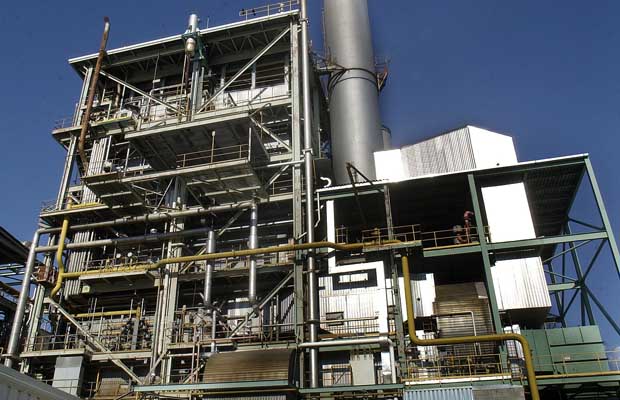
The switch yard at Burrard Thermal Generating Plant in Ioco showing the array of masts and lines carrying power. (Photograph by: Peter Battistoni, Vancouver Sun) |
Producer of the most expensive power in B.C. also huge source of greenhouse gas emissions
PORT MOODY: Some critics think the 50-year-old Burrard Thermal generating plant, located along the northwest Port Moody shoreline, should be junked.
And why not? This out-of-date, greenhouse gas-belching electrical generating station on Burrard Inlet will cost BC Hydro customers almost $900 million over the next decade.
When it runs at close to capacity, it is the single-largest source of greenhouse gas emissions in British Columbia.
It will produce only a nominal amount of electricity for $900 million — and it’s going to be some of the most expensive power generated in B.C. during that time because it relies on price-volatile natural gas as its energy source.
BC Hydro says it’s worth it, and is awaiting word from the B.C. Utilities Commission on a proposed initial stage of capital spending to upgrade the plant’s mechanical systems.
Hydro says keeping Burrard operational is the only way it can guarantee the Lower Mainland a secure electricity supply during winter months of peak demand.
Without Burrard, the closest source of electricity big enough to support B.C.’s population hub is more than 500 kilometres distant, at Revelstoke — and the high-voltage transmission system between the two communities is itself in need of a major upgrade.
A project to twin that line — and minimize the risk that an ice storm or a landslide would trigger a blackout in the Lower Mainland — is not expected to be complete for a decade.
Nonetheless, critics such as the Independent Power Producers Association of British Columbia are questioning why Hydro should be spending such a large amount of money ($119 million annually by 2017) for a facility that will run only a few weeks a year and is essentially a very expensive hedge against spikes in Lower Mainland electricity demand.
In a recent submission to the utilities commission, IPPBC described Burrard Thermal as “antiquated and very inefficient” — converting into electricity only 31 per cent of the energy it consumes.
The association says it can “through competitive bid processes” provide from renewable energy projects the electricity that Hydro seeks.
It also argues that, by Hydro’s own admission, in the event of a mechanical breakdown at Burrard Thermal it could take up to 18 months to obtain replacement parts because “stock spare parts are no longer available.”
In an interview, IPPBC legal counsel David Austin said Burrard “has outdated technology, and it’s way past its shelf life.” He said a reconsideration of Burrard’s role on the Hydro grid is “long past due.”
“The ongoing costs of maintaining Burrard are very, very high relative to the amount of electricity it can generate.”
Cam Matheson, BC Hydro director of energy planning, said that even within the Crown corporation, there have been mixed views about Burrard’s future.
At present, Hydro lists Burrard as a primary asset producing 3,200 gigawatt hours per year — although Matheson said the actual production target is 600 gigawatt hours.
“Burrard Thermal is a backup plant. We don’t intend on using it for any kind of a base load capability,” Matheson said in an interview. “Burrard is located in our load centre, the Lower Mainland. The essential electricity system planning conundrum in B.C. is that we’ve got a very concentrated load centre in the Vancouver and Victoria corridor.
But, “the vast majority of our generating facilities are located in hugely remote areas away from that load centre.”
Hydro estimates spending $27 million a year to keep the plant operational, $10 million a year in carbon taxes for the natural gas it will burn — and up to $71 million a year to purchase the gas itself.
A new plant would be twice as efficient, effectively lowering the cost for gas, but Matheson said it’s highly unlikely Hydro could get a permit to build a modern gas-burning generation plant in the Lower Mainland — and building one in a more remote area would only compound the region’s isolation from its electricity supply. “Our view is that the risk of [not] getting an environmental permit to proceed to build a natural gas-fired plant in the Lower Mainland would be very, very high.
“The big risk here is that if you were going to spend all that money to build a new natural gas plant in your load centre, in the Lower Mainland, you would almost certainly be planning on turning it into a base load resource. It would run all the time, and it would have a whole lot of greenhouse gas emissions — and therein lies the risk of ever getting it permitted here.”
The board of directors of Metro Vancouver have indicated they would not support a full-blown renewal of Burrard, although the city of Port Moody, where Burrard is located, has expressed a wish to keep the old plant running — because it contributes significant tax dollars to the economy of a city that has lost a number of major industrial tenants in recent years.
Port Moody Mayor Joe Trasolini noted that Burrard spent hundreds of millions of dollars over the last 15 years upgrading the filtration systems in its burners, to the point that it’s now “the most efficient and least-polluting plant of its type in North America.”
“Of course there is the issue of income to the city of Port Moody, but that is a distant second,” Trasolini said.
“We have been told that at some point it is going to be shut down. But what we are saying to BC Hydro and the provincial government and to anyone who will listen is that this site is perfectly located along the waterfront. Why not look in the longer term at producing renewable energy there, something that will maintain the site as an important facility for Metro Vancouver and the province.”
Blog: www.vancouversun.com/energy
© Copyright (c) The Vancouver Sun
May 17, 2009
Oil cube lifted out of Robson Bight 'cleanly'
By Judith Lavoie
Times Colonist
May 16, 2009
$2.5M salvage operation underway after barged tipped in August 2007
Observers on a barge in Robson Bight ecological reserve held their breath yesterday afternoon as a metal cube containing 1,400 litres of hydraulic oil was carefully pulled to the surface.
"There was a lot of anticipation when the cube finally broke the surface, but the crew were very calm and professional, which helped," said Randy Alexander, environmental protection manager for the Environment Ministry.
The two-metre-square container, with 72 pails of lube oil, had been sitting on the ocean floor since August 2007 when a barge tipped equipment into the famed wildlife area, where threatened northern resident killer whales feed and rub themselves on pebble beaches.
The 11 pieces of equipment belonged to Ted LeRoy Trucking of Chemainus, which is charged with numerous pollution violations. The company declared bankruptcy last year.
The $2.5-million operation to remove the oil cube and a fully loaded fuel truck from 350 metres of water is being conducted by Mammoet Salvage B.V., a company based in the Netherlands, on behalf of the province and federal government.
A remotely operated underwater vehicle was first sent into the water, then a crane dropped down hooks and chains, which were attached to the container by the underwater vehicle before it was slowly pulled to the surface.
Initially, the company planned to cover the cube with a special jacket to catch any spills, but with debris on the ocean floor, it was feared cables could be snagged.
The operation went extremely smoothly, said Paul Spong, director of whale research station OrcaLab, one of the many environmental groups pushing government to remove the equipment.
"It came out of the water cleanly. There was a tiny bit of residual oil, but they had a boom around the site and I would say there was no impact on the environment."
After the accident, the federal government initially said there was no point sending down a remotely operated vehicle as fuel tanks would have imploded as they sank.
In response, environmental groups planned their own underwater survey, and government had a change of heart.
An inspection showed intact tanks, with an estimated 10,000 litres of fuel, sitting on the ocean floor.
After a delay of almost two years, the operation was planned for a season when whales were unlikely to be in the area, although in recent weeks, several groups of transient orcas have spent time in Robson Bight.
However, yesterday they all stayed away, said Spong, who is keeping his fingers crossed they will not venture into the area as the fuel truck is lifted.
Late yesterday afternoon, the barge was manoeuvered into position over the fuel truck. Weather will decide whether it is lifted today or tomorrow.
The truck will be covered with metal casings before being lifted to protect against spills.
The government hopes to recoup some of the operation's cost from Ted LeRoy Trucking .
© Copyright (c) The Victoria Times Colonist
May 14, 2009
Bute Inlet Project referred to Joint Panel Review
News Release
Canadian Environmental Assessment Agency
May 13, 2009
Canada’s Environment Minister Jim Prentice announced today that the proposed Bute Inlet Hydroelectric Project located about 150 km north of Powell River in British Columbia will undergo an environmental assessment by a federal review panel. The Minister's decision of May 5, 2009, follows a request from the Minister of Fisheries and Oceans under the Canadian Environmental Assessment Act.
The federal terms of reference to establish the review panel and the federal-provincial guidelines for the preparation of the environmental impact statement are being issued. The documents were finalized following recent consultations with First Nations and the public.
The Panel’s terms of reference provide information on the scope of the environmental assessment, on the process for conducting the review, as well as further details on the timelines associated with the key steps of the panel review.
The federal-provincial guidelines provide direction to the proponent and identify the information that will be required in the environmental impact statement—the key document which will outline the details of the project, its anticipated effects on the environment and the proposed measures to
reduce these environmental effects.
The federal environmental assessment process will be coordinated to the extent possible with the provincial process in order to minimize duplication and increase efficiency and effectiveness.
The Agency will make funding available to assist First Nations and the public to participate in the environmental assessment process. Availability of participant funding will be announced in the coming weeks.
The Panel’s terms of reference and the guidelines, along with more information on the project is available on the Canadian Environmental Assessment Registry Internet site at www.ceaa-acee.gc.ca, reference number 09-03-44825.
To obtain information on the review process, or to register as an interested party and be kept informed of the developments of the environmental review, call 1-866-582-1884 or provide a mailing or e-mail address to the attention of:
Panel Manager, Bute Inlet Hydroelectric Project
Canadian Environmental Assessment Agency
160 Elgin Street, 22nd Floor, Ottawa ON K1A 0H3
bute.review@ceaa-acee.gc.ca
Guidelines for the Preparation of an Environmental Impact Statement
The next steps in the review process include:
* Announcement of the availability of participant funding: May 2009
* Appointment of panel members by Minister of the Environment: end of Summer 2009
* Submission of the Environmental Impact Statement by the proponent: Fall 2009
All documents related to this environmental assessment can be viewed on the project public registry at the following link:
http://www.ceaa-acee.gc.ca/050/details-eng.cfm?cear_id=44825
From the Panel Terms of Reference:
Preparation of the Environmental Impact Statement
It is expected that the proponent will submit the EIS to the Environmental Assessment Office on or around September 30, 2009. The Environmental Assessment Office will undertake a 30 day screening of the EIS against the EIS guidelines. Once the Environmental Assessment Office determines that the EIS meets the requirements of British Columbia’s Environmental Assessment Act, the proponent will submit the EIS to the panel. The proponent will notify the panel of any deviation from the schedule at least 30 days prior to the submission date of the EIS to the Environmental Assessment Office.
Review of the Environmental Impact Statement
Once submitted to the panel, the EIS will be placed on the public registry, and will be made available for public review and comment for a period of no less than 60 days. Comments on the adequacy of the EIS as measured against the EIS guidelines and on the technical merit of the information should be provided to the panel in writing.
Within 30 days of completion of the public review of the EIS, the panel, taking into consideration the comments received and its own review of the EIS, will determine if the EIS contains sufficient information to proceed to public hearing.
If the panel determines that the EIS contains sufficient information to proceed to public hearing, it will schedule and announce the hearing in accordance with the procedures set out in these Terms of Reference.
If the panel determines that there are significant information deficiencies, such that the EIS is not sufficient to proceed to public hearing, the panel will issue a deficiency statement requesting additional information which the proponent will provide. At the same time the panel will place the deficiency statement on the public registry and make it available to the public.
Determination of the Adequacy of Additional Information
Upon receipt of the additional information, the panel will ensure that it is made available to the public for review and comment.
Upon completion of the public review of the additional information, the panel, taking into consideration the comments received and its own review of the additional information, will determine within 45 days of receipt of the additional information, if the EIS, supplemented by the additional information, is sufficient to proceed to public hearing. The procedures described above will apply until such time as the panel determines that the EIS contains sufficient information to proceed to public hearing.
Public Hearing
Once the panel determines that the EIS contains sufficient information to proceed to public hearing, it will schedule and announce the public hearing. The public hearing will begin no earlier than 45 days after the schedule is announced. The panel will issue detailed procedures for the conduct of the public hearing. The public hearing will provide the proponent, responsible authorities, Aboriginal groups and members of the public an opportunity to present their views on the project. The public hearing will be conducted in a manner that ensures a comprehensive examination of matters relevant to the panel’s Terms of Reference and in particular the examination of technical evidence. The public hearing will be held in the communities most affected by the proposed project. The panel will use its best efforts to complete the public hearing within 30 days.
Report
Following the completion of the public hearing, the panel will prepare a report which will include a description of the panel review process, the rationale, conclusions and recommendations of the panel relating to the environmental assessment of the project, including any mitigation measures and follow-up programs. The panel shall also include within its report a summary of any comments received from the public and Aboriginal groups.
Once completed, the panel report will be submitted to the Minister of the Environment and the responsible authorities and will be made available to the public.
The panel will submit its report within 90 days following the completion of the public hearing.
May 13, 2009
Nelson ordered to stop exporting electricity
By Scott Simpson
Vancouver Sun
May 13, 2009
City was turning profit on BC Hydro generation
An alleged electricity arbitraging operation by the city of Nelson has been halted by the British Columbia Utilities Commission after protests by BC Hydro.
Since July 2008, the city, through its Nelson Hydro subsidiary, had been exporting electricity generated at its Bonington Falls generating station on Kootenay River, then using power derived from BC Hydro to backfill local electricity needs.
Nelson Hydro was employing Fortis, the primary electricity utility in southeast B.C., to deliver the power to buyers outside the province, and also contracted a power-trading company to assist.
Hydro is obliged to fill all electricity orders placed via Fortis for the benefit of B.C. consumers -- but argued that its obligation was never intended as a mechanism to allow third parties to buy cheap power from the Crown corporation and then turn around and sell it at a profit to somebody else.
The city was making $50,000 a month, but Hydro said it could balloon into a $17-million-a-year enterprise -- with Hydro ratepayers ultimately bearing the cost.
Nelson was using the money to minimize electricity rate increases for its customers, and to finance local initiatives to cope with climate change.
Hydro asked the utilities commission for clarification on its obligations to provide power to Fortis, fearing that Nelson's actions could set a precedent.
On May 6, the commission released a decision that favoured Hydro, saying Nelson can only sell power where it can demonstrate that it is holding a surplus beyond the demands of its own customers.
Nelson Hydro general manager Alex Love said city officials are still reviewing the decision.
But he said the BCUC's ruling "makes it difficult for us to make the energy sales that we were doing."
"Basically, it says that while we are exporting energy we can't at the same time be consuming energy that was supplied by Fortis or through BC Hydro.
"There are a lot fewer times of the year now where we are able to export energy -- and a lot less energy."
BC Hydro media relations manager Susan Danard said Hydro recognizes that municipalities are cash-strapped and searching for revenue sources.
"The problem was that we felt -- and the commission ruled in agreement with us -- that they were raising revenue, which ultimately was coming off the backs of Hydro ratepayers province-wide. We have to keep in mind that the value of our low-cost energy is supposed to benefit everyone in the province."
Blog: www.vancouversun.com/energy
© Copyright (c) The Vancouver Sun
BCUC Decision"in the matter of British Columbia Hydro and Power Authority and Application to Amend Section 2.1 of Rate Schedule 3808 Power Purchase Agreement"
May 12, 2009
BC Hydro, Teck talk power purchase
By Scott Simpson
Vancouver Sun
May 12, 2009
Deal might be made if beneficial for ratepayers, Hydro official says
BC Hydro is negotiating with Teck Resources to purchase electricity from the company's Waneta generating facility near Trail in southeastern B.C.
Hydro confirmed that negotiations are under way although Teck would not specify the names of parties with which it is discussing possible power sales.
Teck is reportedly negotiating to sell about one-third of Waneta's output -- or enough electricity to power 100,000 homes.
Teck has a National Energy Board permit to export electricity from the 450-megawatt Waneta station on Pend d'Oreille River. NEB records show the Vancouver-based mining giant grossed $7.9 million from firm power exports to the United States in 2008.
Teck fetched an average price of $61.28 per megawatt for exported power in 2008 -- or about 2.5 times BC Hydro's cost to generate electricity from its own heritage generating facilities around the province.
"We are in discussions with Teck as well as some other existing power producers in B.C. just to see [if] they have any available energy," Hydro media relations manager Susan Danard said in an interview. "No agreement has been reached. We are discussing what they could provide for us, and at what price and that's about as far as we can go at this point. Generally speaking we would be interested in negotiating either short- or even long-term electricity purchase agreements -- but only if the terms are beneficial for our ratepayers."
Electricity sales have at times been extremely lucrative for Teck -- during the 1999-2000 California electricity crisis the company shut down its smelter at Trail because it could make more money selling into the California market.
Over the past year as a result of a higher debt burden and falling commodity prices, Teck has been seeking ways to lower its costs in order to get a better grasp on its debts.
"We are only able to say that we continue to keep our options open with respect to asset sales as part of our broader plan to reduce debt and position the company for short- and long-term success," Teck communications manager Catherine Hart said in an e-mail.
The Waneta facility is 55 years old and power production costs are likely very low -- as they are at Alcan's similarly aged Kemano generating facility on the Nechako River near Kitimat on B.C.'s central coast.
Hydro is paying Alcan $50-$60 per megawatt hour for surplus power from Alcan's aluminum smelter at Kitimat.
As the NEB's numbers show, Teck's average price for sales into the U.S. market is somewhat higher -- $61 per megawatt hour.
It's likely that Hydro will pay Teck more than it does Alcan because Teck has added leverage -- it has its own dedicated transmission line to the U.S. border.
In the 2006 Hydro call for new sources of power, the average price paid by Hydro was $88, including the cost of delivery.
Energy sector commentator David Austin found the deal surprising, given that Hydro recently announced it's reducing by almost 50 per cent the volume of electricity it is planning to contract with private power producers in a new call for renewable sources of electricity.
Read Scott Simpson's BLOG at vancouversun.com/energy
© Copyright (c) The Vancouver Sun
May 11, 2009
Oil spill at Kinder Morgan is 'fully contained'
C Myers
Burnaby Now
May 9, 2009
 |
About 200,000 litres of crude oil spilled from one of the tanks at the Kinder Morgan facility on Burnaby Mountain this week, but it was completely contained and presented no health or environmental risk, says a company spokesperson.
At about 10 p.m. on Wednesday night, staff at the facility realized that oil was being released from a tank.
"It was discovered immediately, and we were able to take immediate action," said Lexa Hobenshield, manager of external relations with Kinder Morgan. But, she says, even if staff hadn't spied it immediately, "the tank bay is designed to contain a spill like that."
Hobenshield told the NOW that each of the 13 tanks on the site sits inside a berm, or containment bay. The berm is designed to hold more volume than the tank itself, so that any spill from the tank would be easily contained.
Additionally, each berm has monitoring equipment inside so that a spill would activate the closure of a valve to contain the bay.
"The release is contained, and there are no health concerns. But we are very apologetic to our neighbours," she said, noting that a strong odour was in the air for some time after the spill.
"Protecting the public and employee health and safety and the environment is number 1 for us," she said. "To ensure safety, we monitored air quality around the site."
Staff performed repeated patrols outside the site fence overnight Wednesday and into Thursday to assess air quality.
"There were nuisance odours - quite strong, but the air quality assessment showed no health concerns," she said.
Local fire service crews were on site shortly after the spill, and foam was sprayed onto the oil in the bay to help mitigate the odours, said Hobenshield.
The company also alerted all required regulatory agencies, who may now perform their own investigations on top of the investigation Kinder Morgan will carry out on its own.
Though Ho-benshield said it was too early to say exactly what caused the spill, they believe that it resulted from the failure of equipment being used by a third-party contractor.
Specifically, Hobenshield explained that it's believed a jet mixing pump failed. The pump is used to stir up the contents of the tank to loosen any deposits at the bottom, to prepare for an internal inspection of the tank.
The tank itself did not leak and wasn't damaged, nor were any of its permanent fixtures damaged.
On Thursday, staff at the site were working to transfer the contained oil to a storage tank, and the company is hopeful the 200 cubic metres of crude oil can be reclaimed.
When asked about early media reports that there may have been an oil slick spotted in Burrard Inlet, Hobenshield said they were confident the spill was totally contained in the berm.
"We believe that the spill was effectively contained on site, and any product anywhere else is not related to us," she said.
She also noted that, geographically, the tank farm sits on the south slope of Burnaby Mountain, not the north side, so that if oil had had been spilled outside the containment tanks its very unlikely it could have travelled in that direction.
When asked if the company is concerned about the public's perception of operations at Kinder Morgan, in light of the 2007 massive oil spill and this incident, Hobenshield said the two situations can't really be compared.
"This is a really unfortunate event. It's also very unusual, and it's under a completely different set of circumstances. We've never had anything like that before," she said.
In July 2007, city-hired building contractor accidentally hit a pipeline xburied under a residential street with an excavator.
The spray of oil that erupted led to the evacuation of several homes in the area, and lawsuits in that case are still pending.
Hobenshield says the facility, which is the end of a 1,150 kilometre petroleum pipeline coming from Edmonton, holds the safety and health of its neighbours as a top priority.
"Our top concern is the health and safety of the public and the environment," she said.
A community open house, scheduled prior to the latest spill, is set for June 20, and Hobenshield says it's an opportunity for neighbours to check out the facility and talk to staff about concerns.
cmyers@burnabynow.com
© (c) CanWest MediaWorks Publications Inc.
BC Libs zapped regs for private power, doc shows
Geoff Dembicki
The Tyee.ca
May 7, 2009
B.C.’s powers to protect key wildlife areas have been chiselled away by a government directive intended to placate private power companies, according to two environmental groups.
“What you see is the ministry of environment no longer having the ability to uphold protection of endangered species if it stands in the way of independent power,” said Jessica Clogg, senior counsel for West Coast Environmental Law.
The document in question is a confidential ‘decision note’ signed by environment deputy minister Doug Konkin on March 18, 2009. It appears to remove the authority of the Ministry of Environment to block industrial developments – such as independent power projects (IPPs) – that could impact protected wildlife areas.
The current government has touted IPPs, such as run-of-river hydro projects, as a green source of energy. But many groups fear the private developments destroy river ecologies and encroach on wilderness areas with roads and power lines.
Any IPP capable of generating more than 50 megawatts must be approved by the BC Environmental Assessment Office. Sometimes the projects get approval even though they could impact protected wildlife areas that are home to endangered species.
In those cases, the private company applies to the Ministry of Environment for an exemption to the rules. Previously, it was up to a regional manager to decide whether a project got the go-ahead.
But the March 18 decision note – made public by the Wilderness Committee – suggests the provincial government wants to change the process.
“Government does not want to create a situation where an exemption is withheld after [an environmental assessment] Certificate has been issued,” the decision note reads.
The document recommends that regional managers no longer be given the authority to say ‘no’ to a request for an exemption.
“If a Regional Manager does not wish to issue the exemption it would elevate to the Minister,” it reads. The document argues this option is “likely to be perceived well” by the proponents of industrial developments.
“Behind the scenes, we can see in the language of this thing how the Ministry of Environment seems to be mostly concerned with keeping the private power guys happy,” the Wilderness Committee’s Joe Foy said.
Though Foy was concerned about the document’s implications, he wasn’t sure if its recommendations had actually been implemented. Environment ministry spokesperson Kate Thompson refused to comment on confidential documents.
“All we can deal with as bureaucrats is what’s published and publicly available,” she said. Environment minister Barry Penner did not respond to The Tyee’s phone calls Thursday .
Geoff Dembicki reports for The Tyee.
May 07, 2009
B.C. scientists urge strategic voting to protect watersheds
MARK HUME
Globe and Mail
May 6, 2009
VANCOUVER — Five leading conservationists and environmental scientists said yesterday that British Columbia watersheds are threatened by provincial government policies, and they urged the public to “vote strategically” in next week's election.
They were reluctant to endorse any specific party, but their pointed criticisms of policies introduced by the Liberals indicated they think a vote for the NDP would be in the best interest of the environment.
“When you see five people of this calibre gathered together to raise the alarm, you have to pay attention,” said Craig Orr, who moderated a group news conference.
Making statements were Mark Angelo, chairman of the Rivers Institute at B.C. Institute of Technology; Elaine Golds, a biochemist; William Rees, a professor at the University of British Columbia; Alexandra Morton, a leading salmon researcher who has been campaigning against salmon farms; and Vicky Husband, a senior environmental advocate.
Three of the people present – Dr. Orr, Dr. Rees and Ms. Morton – are on the board of a non-profit group, the Save Our Rivers Society, which sprang into existence because of concerns over the government's promotion of private power projects in B.C. watersheds.
Ms. Husband said the environment is a non-partisan issue, and offered criticism of not only the NDP and Liberal platforms, but also of the Green Party. “I wouldn't say who to vote for,” she said, but then ran through a list of concerns that showed she thinks the Liberal government has put B.C.'s environment at risk. “We have the best place on earth,” she said, echoing a government advertising slogan. “Then why the hell aren't we protecting it?”
Mr. Angelo said he is concerned about the lack of an overall plan for developing run-of-river power projects in the province and a lack of public consultation. “Whoever wins has to address those concerns,” he said.
Ms. Morton accused the government of putting wild salmon at risk by allowing fish-farm expansion and by promoting power developments on numerous rivers. “I personally have always voted Green, but I feel personally responsible for [Liberal Leader] Gordon Campbell getting in, so I'm voting NDP,” she said.
Dr. Rees indicated he is doing the same thing, saying he has an affinity for Green policies, “but I probably will vote strategically to try and avoid having the Campbell government return.”
The Angriest Riding in BC
By Geoff Dembicki
TheTyee.ca
May 7, 2009
 Cecil Dunn and the house he felt forced to abandon. |
In Tsawwassen, massive power lines have sparked voter rage.
Cecil Dunn fought the provincial government and lost. For four years, he battled a proposal to build steel power poles in the backyards of Tsawwassen homes. The struggle wasn't just about sparing residents the anxiety of ever-present radiation or saving its tree-lined skyline from 30-metre eyesores. Dunn's own house of 26 years lay on the proposed route. The fight was personal.
The retired Telus executive describes the last four years like a rollercoaster ride, full of euphoric highs and cynical lows. But the defeats built up one by one. The opposition he spearheaded lost in B.C.'s highest court. The power poles went up last summer. And this year, faced with a tough choice between life under the lines or a government buyout, he opted to sell the home he'd planned to grow old in.
Dunn feels betrayed by the political system, but not enough to abstain from the May 12 vote. He's throwing his support behind heavyweight independent Vicki Huntington, a five-term local councillor who's promised to defend Delta South against the whims of big government. Her main challenger, BC Liberal Wally Oppal, is drawing from the same sense of helplessness, albeit with a twist. As attorney-general, he's promised voters the ear of the premier and a key voice in cabinet.
Whether voters reject the current government or bid for a stronger place inside it is anyone's guess. But perhaps nowhere else in the province is the choice so visceral.
From a 'back lane to a superhighway'
I meet Dunn in a Tim Horton's on Tsawwassen's main strip. He buys me a coffee and we stake out a table near the back, away from the crowds of seniors gathered for their morning social. I tell him this is my first time in town. Normally I'm just passing to the nearby ferry terminal. He nods his head in assent. "Just like most people," he says.
Dunn begins our talk with a crash course in local power line history. In the mid 1950s, the British Columbia Electric Company bought land rights for a transmission corridor through "a couple of potato farms and forest." Tsawwassen grew into a thriving coastal community over the coming decades, cut in half by 17-metre wood power poles on a 3.7 kilometre right of way. Many homeowners assumed the lines would be dismantled once their life cycle came to end.
In late 2004, they were shocked by the province's proposal. The old lines were coming down. And in their place, 20 steel poles the size of a high-rise, capable of transmitting 60 per cent more power and connected to a 23.5 km submarine cable under the Strait of Georgia. Residents were told the project was essential to meet Vancouver Island's growing energy needs.
"The analogy I like to use is they wanted to turn a back lane into a superhighway," Dunn says.
Retracted promises
The Tsawwassen Residents Against Higher Voltage Overhead Lines (TRAHVOL) sprung up to fight the proposal. Dunn spent hours researching the link between electro-magnetic fields (EMF) and cancer rates. He shook hands with senior government executives, urging them to reconsider. TRAHVOL's efforts soon paid off -- or so residents thought.
Just weeks before the 2005 provincial election, Dunn received a letter from Energy Minister Richard Neufeld. The B.C. Transmission Corporation (BCTC) had abandoned plans to build overhead lines in favour of yet-to-be-determined alternatives, it read.
"People were excited," Dunn says between sips of coffee. "They thought, 'Hey, these guys are actually listening to us.'" When election day came, BC Liberal Val Roddick defeated the independent Huntington by 1,100 ballots. Dunn's vote helped her win.
"We were all a bit politically naïve," he admits. "I have quite a different view of politics than I did then."
After the election, BCTC announced plans to bury high voltage lines in a shallow trench along the Tsawwassen right of way. Residents weren't impressed. They argued the plan would tear up backyards and emit even more radiation than the steel pole system. Even worse was a carefully worded July letter from Neufeld that appeared to play down the province's commitment to oppose overhead lines.
TRAHVOL proposed alternate routes, organized rallies and pleaded with government officials, to no avail. In the absence of broad public support, the province's utilities commission disregarded the trench alternative and forged ahead with the original proposal. A legal battle followed, but B.C.'s court of appeal refused to reverse the decision. Construction on the towers wrapped up last summer and BC Hydro energized the lines in December.
'They look disgusting'
South Delta Secondary School sits in the middle of Tsawwassen, a low building fringed by open sports fields and leafy residential streets. When I visit, wind tousles the hair of teenagers enjoying their spares in the sun. The setting would be unexceptional, were it not for the gigantic steel towers cascading down a nearby hill -- or the 30-metre power pole that juts out from the parking lot, towering over surrounding cars. During the fight to reroute the overhead lines, Delta Secondary became a key battleground. The Mothers Against Power Poles formed out of fears the school's 1300 students would be made test subjects for prolonged EMF exposure. After the lines went in, some parents withdrew their children, and local anger hasn't subsided.
The BCTC maintains exposure levels are well within the World Health Organization's guidelines. It notes 30 years of scientific studies haven't revealed any definite link between EMF and cancer. Still, as the Canadian Cancer Society points out, incidents of childhood leukemia appear to be greater when radiation levels are high.
Crossing the school's soccer field, I approach a group of Grade 12 girls reclined on a blanket. The appropriately named Natalie Watts seems a bit aloof as I motion towards one of poles. With graduation so near, she's not too concerned about radiation. But aesthetics are a different story. "I hate them. They look disgusting," Watts says. "It's our small town and there's these huge urban power lines going through."
'People here are exhausted'
When I enter Ladner's ABC Restaurant later that day, Vicki Huntington appears tired. We take a booth near the back and I glance at the flower paintings on the walls. "It's so loud here," she remarks, cringing at the background muzak.
Huntington tells me she was courted by Gordon Campbell and Carole James before her campaign began. Both knew her local popularity and five terms in civic politics make her a potent candidate, she says. But neither offer was enough to sway her.
"I'm firmly of the opinion that MLAs in British Columbia represent parties, not the people," she says.
That's been a frequent theme in Huntington's campaign as she tries to position herself as a staunch defender of local interests, unbeholden to a government that treats Delta South like its personal "doormat."
When she lists off local grievances, they sound like personal affronts. The healthcare cuts that gutted Delta hospital. The proposed Deltaport container expansion and $1 billion South Fraser Perimeter Road -- both poised to destroy critical wildlife habitats, she claims.
And of course, the Tsawwassen power lines. I ask her whether an independent MLA could have made any difference in an entrenched party system. She brings up the late Chuck Cadman in response -- everyone knows if single voices can't make a difference, democracy has failed, she says.
"People here are exhausted. They've been fighting their own government for almost eight years."
(Delta South isn't the only area to rally against outside encroachment. See sidebar for examples across the province.)
Anger Hotspots in BC
The Tsawwassen power lines upgrade isn't the only infrastructure project to raise the ire of B.C. residents. Here are four current examples of concerned citizens taking on powerful interests.
Texada Island
In 2007, WestPac LNG Corp. proposed a $2 billion mega-project to build a liquefied natural gas terminal and electricity facility on this island in the Strait of Georgia. Texada Action Now formed to fight proposal, claiming the project would be a major eyesore and anathema to the province's carbon targets. Project still in early stages.
West Vancouver
A $130 million road connector formed a key part of the Sea-to-Sky highway upgrade. The Eagleridge Bluffs Coalition feared the project would harm critical wetlands and held vocal protests that resulted in arrests. The province turned down a costly tunnel proposal and the four-lane highway opened last month.
MacMillan Provincial Park
A provincial proposal to build a new parking lot in the old-growth forest at Cathedral Grove pitted loggers against camped-out protestors in early 2004. Cabinet minister Bill Barisoff vowed to have the lot built before the summer tourist season but years of protests followed. The lot was scrapped in 2006.
Klappen Valley
Shell Canada received land tenure five years ago to explore for coalbed methane near the Sacred Headwaters in northwest B.C. The Tahltan First Nations blockaded roads in 2007, citing concerns about salmon habitat destruction. Arrests followed and both sides threatened legal battles. The province set a moratorium on the project last fall. -- G.D.
Oppal's strategy
After meeting with Huntington, I contact Oppal's headquarters. I was supposed to sit down with the attorney-general at noon, but his campaign manager called in the morning to cancel. I'd visited his Tsawwassen office twice today but was told both times he was too busy to talk. Phone in hand, I try my luck again.
Election staffer Matthew Naylor tells me Oppal definitely can't meet today. "Would he be able to phone sometime this week?" I ask. "I wouldn't be too optimistic," Naylor replies.
This is Oppal's first run for Delta South, though he's called Tsawwassen home for 10 years. If 2005 results are any indication, the vote here could be tight. Most analysts predict a dead heat between the well known attorney-general and the former councillor, with the New Democratic Party's Dileep Athaide trailing in third.
Though Huntington draws on popular anger to buoy her candidacy, Oppal's personal charm and claim to be a powerful voice in government could carry him to victory. "The premier listens to me. Other members of my cabinet listen to me," he told a packed room of Huntington supporters at an April 16 debate.
His challenger likes to point to Oppal's record of silence on critical Delta South issues, including his intervention against TRAHVOL's power line challenge in the court of appeal. But the attorney-general can hit hard too. The governing party makes the rules, he argued at the debate earlier this month. "There's no possible way that any independent could have any influence on that."
Strange homecoming
Back in Tsawwassen and fresh off our Tim Horton's chat, Dunn takes me for drive in his green pick-up. We follow the steel poles -- from the hulking power station near Fred Gingell park to the tree-lined street he used to live on. After electricity started flowing, the provincial government made tempting offers on 119 homes. Only 15 households could resist. Dunn moved to Ladner on April 1, and as we stand in front of his old house, he tells me government workers just came by to change the locks. For the time being, it sits empty.
We're soon being greeted enthusiastically by Dunn's old neighbour, Rick Grant. He took the government buyout too, but won't be leaving until the end of summer. The former neighbours chat like old friends. "You know, there were some people by last week to cut your lawn," Grant says. He leads us to a compact backyard, bursting with spring colours. Overhead, power lines grid the sky. The poles are impossible to miss.
"Your tulip tree looks great," Dunn says, pointing to the white petals littering the grass.
"It's the energy from the lines," Grant jokes.
When Dunn and I get back into the car, I notice a Huntington sign on his old front lawn. He says Grant put it there. We start to drive and he tells me the decision to leave Tsawwassen was one of the hardest he's ever made.
"You've always got that apprehension in the back of your mind -- do you live with these lines forever or start a new life?" He takes a right turn down a quiet street. "What we chose is not what we wanted to choose."
May 06, 2009
Does a carbon tax make the Liberals green?
Vicky Husband,
Special to Times Colonist
May 06, 2009
The NDP has let the government off the hook on its sorry record
The New Democratic Party's opposition to a carbon tax is a mistake. The result is that the NDP are pilloried as environmental dinosaurs, while the Liberals escape scrutiny for their own abysmal environmental record.
Even on the climate-change file, the Liberal government's record is decidedly mixed. Don't forget that the Liberals have supported massive urban sprawl -- a major source of B.C.'s greenhouse gas emissions.
The massive Gateway freeway initiative ensures dramatic new sprawl far up the Fraser Valley, while on Vancouver Island, the decision to allow Western Forest Products to remove massive tracts of forestland from managed forest status opened the door for another 50 kilometres of suburban sprawl between Sooke and Port Renfrew.
The auditor general heavily criticized that decision regarding Victoria's wild coast, saying that government failed to give due regard to the public interest, including environmental interests.
And how can the Liberals claim the high ground on climate change, when they have promoted offshore oil development, provided $1.5 billion in subsidies to the oil and gas industry and supported new pipelines for dirty tarsands oil?
Don't forget that when this government came into office, its first move was to repeal 40 years of environmental laws and slash Ministry of Environment staff, crippling that agency -- while cutting parks budgets and interpretation programs.
Don't lose sight of the fact that the Liberals repealed the Forest Practices Code, replacing it with a toothless regime that has resulted in increased raw-log exports and so many usable logs being abandoned at logging sites that you could add another five per cent to B.C.'s overall greenhouse gas emissions.
Don't forget, too, that this government has refused to pass a provincial Endangered Species Act while sabotaging the federal Species at Risk Act by instructing its scientists to remove the mapping of known endangered species habitat from SARA recovery strategies.
Don't forget, as well, that this government helped its developer friends by gutting the riparian areas regulation -- stripping critical protection for fish along new subdivisions. Then the government expanded fish farm production -- one of the biggest threats to the survival of our wild salmon. At least it was, until the government opened up the private hydro development gold rush on scores of our wild rivers.
And, in an assault on the province's fisheries, the Liberals have let gravel and cement makers strip-mine in the heart of the lower Fraser River.
Early on, the Liberals made industrial developers happy when they gutted the provincial environmental assessment process. They went on to make urban developers happy when they restructured the Agricultural Land Commission into regional review panels, making land removals from our shrinking prime agricultural land base easier.
Following the same mantra of deregulation that created the global economic meltdown, the Liberals have deregulated activities ranging from septic systems to pesticides, and from forest practices to subdivision development and contaminated sites.
It's a sorry environmental record. If the Liberals were really concerned about the environment, they would:
- End subsidies to the oil and gas industry.
- Stop the proposed northern pipelines that would increase tanker traffic on our coast.
- Stop promotion of offshore oil development.
- Cancel the southern Gateway project and massively increase public transit funding.
- Buy back the WFP tree farm licence lands west of Victoria, for parks and forest uses.
- Establish a moratorium on run-of-river projects until a comprehensive planning process is established, with full public and local government participation.
- Re-establish the mandate and budget of the Ministries of Environment and Forests (including parks budgets).
- Establish legislation to protect endangered species and their habitats.
- Close open-net cage fish farming.
And that's just for starters.
To my fellow environmentalists: Climate change is the biggest threat to life as we know it on Earth. We, as a society, must rapidly reduce our fossil fuel consumption.
But that doesn't mean we must trash the environment to get there.
Vicky Husband is a long-time conservationist and recipient of the Order of Canada for her work on environmental causes ranging from old-growth forest protection to sustainable fisheries.