November 29, 2009
Group formed to oppose pipeline plan
Gordon Hoekstra
Prince George Citizen
Thursday, 26 November 2009
A new environmental group based in Prince George has been formed to fight Enbridge's proposed $4.5-billion oil and condensate pipelines through northern B.C.
The Sea to Sands Conservation Alliance's concerns focus on the risk of a spill from the pipeline and the environmental implications of exporting oil from the Alberta tar sands. Bitumen from the Alberta oil sands create more greenhouse gas emissions - and require more water and natural gas - than conventional oil during mining and production.
Enbridge has said it has a good track record of safety on its pipelines, and it is working hard to maximize economic benefits to local economies.
"I think the concerns outweigh the benefits," said Mary MacDonald, one of the organizers of the new group which has a core of about half a dozen people in Prince George and growing distribution list of about 50 people.
The group - whose concerns echo those of other environmental groups - has also started a facebook site with about 380 members.
The proposed 1,170-km pipeline would carry oil from Alberta's tar sands through northern B.C. to Kitimat, where it would be loaded on tankers for shipment to the U.S. west coast or Asia.
Asia offers an alternate market for oil from Alberta, which almost all flows to the U.S. via pipelines.
The proposed pipeline travels near Prince George, at Bear Lake, and will cross more than 1,000 rivers and streams.
Enbridge Northern Gateway Pipelines spokesman Steve Greenaway said the company would like to hear the new group's concerns directly. "I hope they would consider participating in our community advisory board process because that's where groups and organizations can come and sit directly at the table, and ask all the tough questions," he said. "It's certainly our obligation to answer as many as we can."
Enbridge is getting ready to hold another round of community advisory board meetings, but the sessions are not completely open. People must apply to attend the meetings. The sessions are also currently not open to the media.
Enbridge had shelved the project in late 2006, but put it back on the front burner early in 2008 after securing $100 million from Western oil producers and key Asian refiners to get the project through the regulatory process under the National Energy Board and the Canadian Environmental Assessment Agency.
Key issues in the complex project - described by Enbridge as the largest crude oil pipeline expansion in North America - include mountainous terrain, the hundreds of river crossings and a tanker terminal at Kitimat.
Thousands of workers will be needed during the estimated three-year construction period, but relatively few when complete. It's estimated that 200 permanent workers will be needed for the pipeline, most of those in Kitimat.
Enbridge has said it plans to file its environmental application before the end of this year or early next year.
A two-year assessment timeline - should the company get approval - puts the start of the three-year construction period beyond 2012.
Sea to Sands Conservation Alliance blogspot: http://s2sca.blogspot.com/

November 26, 2009
Shell Scratches Surface
Eric Swanson
Dogwood Initiative
Nov 24, 2009
The same year that Royal Dutch Shell's Canadian subsidiary was forced to put their coalbed methane plans on hold in BC's Sacred Headwaters region, the company was quietly laying the groundwork for a large coalbed methane project in northeast BC.
 Royal Dutch Shell has an operating coalbed methane project in northeast BC |
The same year that Royal Dutch Shell's Canadian subsidiary was forced to put their coalbed methane plans on hold in BC's Sacred Headwaters region, the company was quietly laying the groundwork for a large coalbed methane project in northeast BC.
In 2008 Shell signed a joint venture agreement with Canadian Spirit Resources, dumping $50 million into the "Farrel Creek pilot project" just north of Hudson's Hope, BC. The project is adjacent to the Peace River Coalbed Methane project, which is the first and only commercially producing CBM project in the province.
Shell has been busy. They have purchased 95 sections of land, have completed an expandable gas processing plant, a gas gathering system, and a total of twelve wells so far. The project sold its first unit of gas in June 2009.
Shell is tapping into gas trapped in the Gething formation, home of the first coal discovered in BC. Potential reserves of the Gething formation have been pegged at about 4 trillion cubic feet, about half the potential reserves estimated to be in the Klappan anthracite coals in BC's Sacred Headwaters.
 |
The Hague-based multinational has donated cash to a park in Hudson's Hope, has taken town councilors on a tour of their plant, and are nearing a decision about whether to scale up the project and become 75% owners in the process.
Gordon Campbell's provincial government panders to the gas industry; their drive to slash royalties and provide other subsidies to the richest industry in the world will produce a short term revenue fix, but place a long term environmental and social burden on the next generation of British Columbians.
Shell's coalbed methane project is an unfortunate example of Campbell's brand of climate leadership.
November 21, 2009
Customer groups absent in naming of committees
COMMENT: Note that there are only two women, as well. And one has only been a "name" in energy circles for less than a year.
But nobody claims these task forces will do anything other than endorse policies already determined by the government that established the task forces in the first place. So they might as well have put Paris Hilton on one of them for all the difference it's going to make.
Scott Simpson
Vancouver Sun
November 21, 2009
Organizations representing BC Hydro's industrial, commercial and residential customers are absent from the rosters of four committees charged with transforming British Columbia into an electricity export powerhouse.
As announced by Premier Gordon Campbell on Nov. 2, the groups will make recommendations on an ambitious agenda, including regulatory reform of BC Hydro, procurement of new power projects, export market opportunities, first nations partnerships in new power development and green power expansion.
Hydro itself has no representation, although the Crown corporation's legal counsel, Jeff Christian, joins former chairman Mossadiq Umedaly, a political appointee, former Powerex vice-president Tim Newton and frequent Hydro consultant Ren Orans among 29 group members announced Friday by the government.
There are some surprises in the way the appointees were distributed among the four groups. For example, Pembina Institute carbon-trading analyst Matt Horne was named to the resource development group rather than the one looking at carbon pricing.
Energy Minister Blair Lekstrom noted in an interview that groups not represented on the groups will have the opportunity to present their interests.
"Anybody who is not [named] on there and can contribute -- and we think there are many out there -- will be given the opportunity to put their submissions in for these groups to consider," Lekstrom said.
Newton was named chairman of the group charged with recommending improvements to Hydro's methods for soliciting new power supply from independent producers.
McCarthy Tetrault law firm partner Cheryl Slusarchuk, who in 2007 was named chairwoman of the Premier's Climate Action Team, will lead a group looking at carbon trading and expansion of BC Hydro's electricity export market.
Public relations adviser James Hoggan leads a group looking at first nations partnerships in electricity projects, and promotion to communities of private power projects -- the latter an issue that has created bitter divisions within B.C.'s environmental advocacy community.
Canadian Hydrogen and Fuel Cell Association director John Webster leads a committee looking at environmentally sustainable development of new power supply including biomass, solar and tidal power.
November 20, 2009
Green Energy Advisory Task Force Members Named
NEWS RELEASE
For Immediate Release 2009EMPR0021-000655
November 20, 2009
Ministry of Energy, Mines and Petroleum Resources
GREEN ENERGY ADVISORY TASK FORCE MEMBERS NAMED
VICTORIA – The committee members of the Green Energy Advisory Task Force, dedicated to ensuring B.C. remains a leader in clean and renewable energy, were announced today by Blair Lekstrom, Minister of Energy, Mines and Petroleum Resources, Barry Penner, Minister of Environment, and John Yap, Minister of State for Climate Action.
“The new members of the Green Energy Advisory Task Force are leaders who will help us to turn green energy potential into real economic, environmental and social benefits for British Columbians,” said Lekstrom. “Advancing B.C.’s green energy potential is one of the highest priorities for British Columbia, and these leaders will help us to maximize our clean, green energy opportunities.”
As announced by Premier Gordon Campbell on Nov. 2, 2009, the Green Energy Advisory Task Force is composed of four advisory task force groups, reporting directly to the Cabinet Committee on Climate Action and Clean Energy, including:
Green Energy Advisory Task Force on Procurement and Regulatory Reform
This task force will recommend improvements to BC Hydro’s procurement and regulatory regimes to enhance clarity, certainty and competitiveness in promoting clean and cost-effective power generation; and identify possible improvements to future clean power calls and procurement processes.
Green Energy Advisory Task Force on Carbon Pricing, Trading and Export Market Development
This task force will develop recommendations to advance British Columbia’s interests in any future national or international cap and trade system, and to maximize the value of B.C.’s green-energy attributes in all power generated and distributed within and beyond B.C.’s borders. The task force will assess the market opportunity for B.C.’s clean and renewable electricity, plus any barriers and how they may be addressed, including any future national or international cap and trade system.
Green Energy Advisory Task Force on Community Engagement and First Nations Partnerships
This task force will develop recommendations to ensure that First Nations and communities see clear benefits from the development of clean and renewable electricity and have a clear opportunity for input in project development in their areas. It will work in partnership with First Nations, not only to respect their constitutional right, but to open up new opportunities for job creation and reflect the best practices in environmental protection.
Green Energy Advisory Task Force on Resource Development
This task force will identify impediments to and best practices for planning and permitting new clean, renewable-electricity generation to ensure that development happens in an environmentally sustainable way. The task force will also consider allocation of forest fibre to support energy development and invite input from solar, tidal, wave and other clean energy sectors to develop strategies to enhance their competitiveness.
“It’s encouraging that such a talented group of people care enough about British Columbia to dedicate their time and energy into helping us capture the environmental benefits of developing more renewable power, which is part of our fight against climate change,” said Penner.
The advisory task force groups will also undertake a comparative review of existing policies in other jurisdictions. The advisory task force group membership, listed in the backgrounder, consists of clean-energy experts, energy consultants, renowned climate experts, leading academics, First Nation representatives and environmentalists.
“The demand for clean energy is growing in B.C. and around the world,” said Yap. “The Green Energy Advisory Task Force will be an integral part of our province’s move towards a low-carbon economy where we focus on green jobs and new investment opportunities.”
Information on the new Green Energy Advisory Task Force can be found at www.greenenergytaskforce.gov.bc.ca. Clean and renewable energy continues to be a cornerstone of British Columbia’s climate action plan that will create jobs, support families and generate new economic activity throughout British Columbia. Electricity self-sufficiency and clean and renewable power generation is integral to B.C.’s effort to reduce its carbon footprint and fight global warming.
-30-
A backgrounder follows.
Contact:
Jake Jacobs, Media Relations
Ministry of Energy, Mines and Petroleum Resources
250 952-0628
250 213-6934 (cell)
BACKGROUNDER
November 20, 2009
Ministry of Energy, Mines and Petroleum Resources
GREEN ENERGY ADVISORY TASK FORCE MEMBERS NAMED
Advisory Task Force on Procurement and Regulatory Reform
- Tim Newton, former vice president of Powerex, Director, Board of the Western Electricity Coordinating Council (chair)
- Larry Blain, CEO, Partnerships BC
- Jeff Christian, litigator with Lawson Lundell
- John Keating, founder and CEO of Canadian Hydro Developers
- Dave Kusnierczyk, managing director of Fred Olsen Renewables Canada
- Duncan McCallum, partner with the Public Sector and Infrastructure Group, RBC Capital Markets in Toronto
- Mossadiq Umedaly, former chair of BC Hydro
Advisory Task Force on Carbon Pricing, Trading and Export Market Development
- Cheryl L. Slusarchuk, partner with McCarthy Tetrault (chair)
- Warren Brazier, chair of Clark Wilson LLP Energy and Natural Resources Practice Group
- Scott MacDonald, CEO of Pacific Carbon Trust
- Martin Merritt, former president and CEO of the Alberta Market Surveillance Administrator
- Ren Orans, managing partner of Energy and Environmental Economics
- James Tansey, president and co-founder of Offsetters BC
Advisory Task Force on Community Engagement and First Nations Partnerships
- James Hoggan, president of Hoggan and Associates and chair of the David Suzuki Foundation (chair)
- David Andrews, principal of Cloudworks Energy
- Mike Bernier, mayor of Dawson Creek
- Chief Ken Brown of the Klahoose First Nation
- Peter Kirby, CEO of Xietl (Taku Tlingit)
- Craig Lodge, president of Pinnacle Pellet Inc.
- Dave Porter, CEO of the First Nations Energy and Mining Council
Advisory Task Force on Resource Development
- John Webster, audit and assurance group partner of Price Waterhouse Coopers and director of Fuel Cell Canada (chair)
- Craig Aspinall, manager of Public Policy for Western GeoPower Corporation
- Tzeporah Berman, executive director and co-founder of PowerUp Canada and Co-Founder of ForestEthics
- Paul Hemsley, president of Hemmera
- Matt Horne, director of Energy Solutions, Pembina Institute
- David Huggill, Western Canadian policy manager for the Canadian Wind Energy Association
- Jonathan Rhone, president and CEO of Nexterra and chair of CleanTech CEO Alliance
- John Walker, president and CEO of FortisBC
- Dr. Steve Wilson, principal of EcoLogic Research
Contact:
Jake Jacobs, Media Relations
Ministry of Energy, Mines and Petroleum Resources
250 952-0628
250 213-6934 (cell)
The 10-billion-barrel battle
By Dave Simms
CBC News
Friday, November 20, 2009
1 man's campaign to end B.C.'s offshore drilling ban
Henry Lyatsky is a man on a mission.
The Calgary-based oil industry consultant is on a one-man campaign to lift the moratorium on offshore oil drilling on Canada’s West Coast.
While his message gets a sympathetic ear in in his home town, the centre of Canada’s oil industry, his mission is more of an uphill battle in British Columbia.
 Henry Lyatsky, a Calgary-based oil and mining industry consultant, says the 'silent majority' in B.C. want a moratorium on offshore oil exploration lifted. (CBC) |
Along with an estimated 40 trillion cubic feet of natural gas, it could exceed Newfoundland’s offshore reserves. Both Chevron and Royal Dutch Shell drilled test wells in the area before the ban was imposed but have not released their results.
Standing in the way is the moratorium on tanker traffic B.C. imposed in 1971 and the ban on exploration Ottawa imposed a year later. Provincial efforts in the 1980s to lift the federal ban foundered in 1989 along with the Exxon Valdez, which spilled 40 million litres of crude oil off the coast of Alaska.
In a commentary in the Oil and Gas Journal, Lyatsky argues the majority of residents in B.C. want the jobs and wealth that would come from development, but they have been drowned out by environmentalists.
“The revenues are huge for the province,” Lyatsky told CBC News. “Look at Newfoundland: They got rich off of offshore oil and look at the number of jobs that get created.”
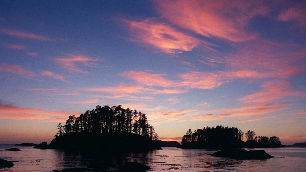 A view of sunset from Anthony Island at the southern tip of Haida Gwaii.A view of sunset from Anthony Island at the southern tip of Haida Gwaii. (Chuck Stoody/CP Photo) |
“It has to be a very silent majority,” she said, given that thousands of people took part in federal hearings from 2003 to 2004 on whether to lift the moratorium and 75 per cent supported keeping it in place. All of the First Nations representatives who took part also opposed lifting the ban.
Still, in a province where the forestry industry is struggling, the unemployment rate is 8.3 per cent, and the provincial government raised $2.66 billion on the sale of onshore oil and gas exploration rights in 2008, the argument is getting some traction.
Offshore fields are much bigger, as are the resulting royalties to governments.
“The public seems to be on-side, but the support for exploration is diffuse around the province,” Lyatsky said. “The opposition to exploration is in the minority but it’s concentrated, it’s vocal, and it’s committed, so it’s very forceful. What we need to do is to energize our own supporters, who are many, and simply overcome that opposition by the weight of democratic numbers.”
Blair Lekstrom, B.C.'s minister of energy, agrees with Lyatsky that the silent majority in B.C. supports lifting the moratorium. Lekstrom's government wants exploration to proceed but, he adds, "unless it can be done in an environmentally responsible and scientifically sound manner, then we wouldn't proceed."
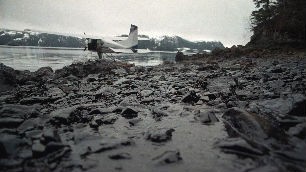 The worst oil spill in U.S. history leaked 40 million litres of crude into Alaska's Prince William Souond from the Exxon Valdez in March, 1989. The worst oil spill in U.S. history leaked 40 million litres of crude into Alaska's Prince William Souond from the Exxon Valdez in March, 1989. (Jack Smith/AP Photo) |
The federal department told CBC News it has no plans to lift the ban at this time.
Lyatsky wants the oil industry — investors, companies, professional associations and consultants — to mobilize opinion.
His timing might be problematic.
An earthquake measuring 6.6 shook the southern tip of Haida Gwaii on Nov. 17.
And on the other side of the Pacific, Australia recently set up a commission to investigate the country’s third-worst oil spill, when as much as 30,000 barrels leaked into the Timor Sea off the country’s northwestern coast. The spill was the first accident among 1,500 wells drilled in Australian waters since 1984, but it continued from Aug. 21 to Nov. 3 and was marked by a fire that burned for two days, destroying the rig.
 The West Atlas rig leaked oil for 10 weeks this fall into the Timor Sea 250 km. northwest of Australia.The West Atlas rig leaked oil for 10 weeks this fall into the Timor Sea 250 km. northwest of Australia. (AP Photo/PTTEP Australasia) |
“When the moratorium was put in place in 1972, it was done so because of concerns about the environment,” she said. “Now we know way more about the impacts of the offshore oil-and-gas industry on the environment. We know that despite modern technology, spills continue to happen.”
Lyatsky says all the objections to offshore drilling are overrated and have been already been answered through extensive experience elsewhere in the world.
O’Connor doubts that.
“When you live here,” she said, “and you depend on the coast, these concerns aren’t overrated. They are really important.”
Lyatsky believes his view will prevail.
“I would say it’s in our own hands," he said. "The chances are pretty good if we make the effort to push things forward. Nothing will happen if we do nothing. It can be done. I’m certain it can be done.”
November 18, 2009
BC Hydro pares bid list for Clean Power, calls for price cuts
Scott Simpson
Vancouver Sun
November 18, 2009
Names of successful bidders still under wraps
BC Hydro will begin awarding electricity sales contracts in December after paring its Clean Power Call list to 13 successful bidders and asking for lower price bids from 34 other hopefuls, the Crown corporation announced on Tuesday.
A further 21 proposals out of the original list of 68 green-power projects announced last year have been dropped for various reasons, including a lack of preparation or individual decisions to withdraw.
The corporation is not disclosing which proposals are successful and which ones may not make the final cut, citing a desire to keep all bids as competitive as possible.
Hydro last year received a total of 68 bids for 17,000 gigawatt hours of power annually, and the trimmed-down list now totals 13,000 gigawatt hours from 47 projects put forward by 31 proponents.
That's still almost three times the amount of power -- 5,000 gigawatt hours -- that Hydro is looking to contract from the clean call, primarily from run-of-river hydro and wind power projects for development of electricity for delivery onto the BC Hydro grid.
Companies with proven track records such as Vancouver-based Cloudworks Energy are on the list of 47 remaining projects, but Hydro is not specifying which projects are among the 13 considered the best candidates.
Cloudworks has six projects listed, tops among all proponents.
Others listed include Plutonic Power's massive Bute Inlet run-of-river hydro project, and the Naikun Wind/Haida Nation offshore wind park proposal.
"BC Hydro is committed to working with companies that provide clean, renewable power to find new sources of cost-effective energy to help meet new energy demand as we look towards serving future generations of customers in the province," said Bob Elton, BC Hydro president and chief executive officer, in a press release.
"BC Hydro will now move forward with discussions aimed at securing electricity purchase agreements with the proponents of the 13 proposals that have been identified as the most cost-effective," the press release said.
"In addition, BC Hydro will provide an opportunity for the proponents of the remaining 34 proposals to make their proposals more cost-effective.
Proposals remaining in the Clean Power Call include hydro, wind and waste heat."
Hydro said it intends to begin awarding contracts in December, and plans to file them with the BC Utilities Commission for final disposal in early 2010.
Paul Kariya, executive director of Independent Power Producers Association of B.C., welcomed the announcement, saying it would help position B.C. as "a North American leader in clean energy and in the effort to tackle climate change, for the benefit of all British Columbians."
"The Clean Call will drive sustainable economic growth and create jobs while reducing our province's carbon footprint," said Kariya in a press release. "Many of these projects will deliver significant benefits and opportunities to local communities and First Nations."
"All the [47] proposals are still alive," Hydro spokeswoman Susan Danard said in an interview. "Some could move in and out of that group of 13 that we are really honing in on.
"If you look at all the proposals that are advancing, 13 plus 34, what it gets us is 13,000 gigawatt hours of energy per year. So even with the ones that have been eliminated, we are still left with a very healthy, competitive call. It's good news for our ratepayers because it means we have a variety of good projects to look at and it's competitive."
She said it's up to proponents who may not make the final cut to decide if they want to push ahead, knowing that the odds of getting a contract are shrinking because some projects have already been accepted.
"We are giving them an opportunity to go back and have further discussions with us. We are saying 'We can't go straight into negotiating an electricity purchase agreement with you but we don't want to eliminate you
- if you are truly interested come and have further discussions with us and we will see if we can get you to a price that's affordable'."
Nexen plans big expansion in British Columbia
Vancouver Sun
November 18, 2009
Nexen Inc. will spend $200 million on its Horn River shale gas play in B.C. over the next year to quadruple its current output, chief executive Marvin Romanow said at an investor conference in New York Tuesday.
And he added during the webcast presentation that the company plans to triple its gas capacity from the area again in the following 12 months.
The company will drill eight 1,800-metre horizontal wells this winter and use 18 fracture stimulations in each well to destroy the rock and allow gas to be recovered, Romanow said.
In last year's program, the company was using only 10 fractures per well.
Romanow said Nexen will continue to buy land in the Horn River Basin.
November 17, 2009
BC Hydro proceeds with next step of Clean Power Call
News Release
BC Hydro
November 17, 2009
VANCOUVER – BC Hydro is continuing to advance the Clean Power Call to acquire clean, renewable and cost-effective electricity, the crown corporation announced today. The Clean Power Call will support the BC Energy Plan's goal of achieving electricity self-sufficiency in the province by 2016. In addition, it will support the province's efforts to reduce greenhouse gas emissions and encourage economic development.
"Clean, renewable energy continues to be a cornerstone of B.C.'s Climate Action Plan. At the same time, the development of a clean energy sector will create jobs and new economic opportunities in B.C.," said Blair Lekstrom, Minister of Energy, Mines and Petroleum Resources. "The reduction in greenhouse gas emissions from the development of a renewable power industry will mean B.C. will have more allowances to allocate to the cap and trade system, which is good for B.C.'s economy."
"BC Hydro is committed to working with companies that provide clean, renewable power to find new sources of cost-effective energy to help meet new energy demand as we look towards serving future generations of customers in the province," said Bob Elton, BC Hydro president and chief executive officer.
BC Hydro received a total of 68 proposals representing more than 17,000 gigawatt hours per year of electricity. BC Hydro has eliminated 21 proposals that are not proceeding in the Clean Power Call either because proponents withdrew their proposals; the proposals did not meet the requirements of the request for proposals, or the proposals were considered to have too high a level of risk. BC Hydro will now move forward with discussions aimed at securing electricity purchase agreements with the proponents of the 13 proposals that have been identified as the most cost-effective. In addition, BC Hydro will provide an opportunity for the proponents of the remaining 34 proposals to make their proposals more cost-effective. Proposals remaining in the Clean Power Call include hydro, wind and waste heat.
BC Hydro intends to begin awarding contracts for the Clean Power Call in December and plans to file the agreements with the British Columbia Utilities Commission in early 2010. For a list of proposals continuing in the call process, please go to here, or see below.
The Clean Power Call complements BC Hydro's two-phase Bioenergy Call for Power, which will utilize wood infected by the mountain pine beetle as well as other wood fibre and biomass fuel sources to supply firm, clean energy.
Contact:
Susan Danard
Media Relations
Phone: 604 623 4220

November 16, 2009
First nations lawsuit seeks to halt power line to Lower Mainland
RICHARD J. DALTON JR.,
Vancouver Sun
November 16, 2009
A lawsuit filed by first nations in the Okanagan seeks to quash a key certificate needed for a proposed high-voltage power line to the Lower Mainland, claiming the province never consulted with aboriginals about the project and two existing high-power lines.
The lawsuit, filed in B.C. Supreme Court in Vancouver last week by the Upper Nicola Indian Band and Okanagan National Alliance against three provincial ministers and BC Transmission Corp., says the province should discuss with first nations the two existing power lines before getting an environmental assessment certificate for a third line.
The $600-million expansion project would add a high-voltage power line connecting the Nicola substation near Merritt to the Lower Mainland. The power lines would pass through at least two first nations' lands: Upper Nicola, which is part of the Okanagan Nation, and the Nlaka'pamux Nation.
Existing high-voltage lines pass through first nations lands in the Okanagan.
Chief Tim Manuel of the Upper Nicola Indian Band said, "This came in 35 year ago, and they never ever consulted us."
"The impacts are certainly both cultural and spiritual and medicinal," he said. "It has impacted everything we do: our traditional lifestyle, our hunting, our food gathering."
The Nlaka'pamux Nation Tribal Council is expected to file a separate lawsuit soon.
Tim Howard, a lawyer with the Vancouver-based law firm Mandell Pinder, which is representing the Upper Nicola Indian Band and Okanagan Nation Alliance, said the province has refused to discuss the existing power lines with his clients.
The minister of energy, mines and petroleum resources and the minister of environment, two of the defendants in the lawsuit, issued an environmental assessment certificate June 3, despite the lack of consultation with first nations, Howard said. The third defendant in the suit is the minister of aboriginal relations and reconciliation.
"It's like someone builds a great big house on your land without ever asking you, without ever talking to you about the impacts, without ever dealing with you at all about the house," Howard said. "And they've always planned an extension to the house. And later on they say 'We want to build an extension, and we only want to talk to you about the new room.' And you say, 'No, no, no. It's connected to the house. Let's talk about the house.
We've never talked about the house.'"
BC Transmission Corp. spokesman Michael Witherly said the provincial Crown corporation received the lawsuit on Friday and hasn't had time to review it yet.
But he said, "BCTC takes its obligations to consult with first nations seriously."
First nations did win a victory earlier this year, when the B.C. Court of Appeal suspended another certificate needed for the project, ruling the BC Utilities Commission didn't consult with first nations before issuing a certificate of public convenience and necessity. The commission is now reconsidering whether to issue the certificate.
Howard and Manuel noted that the province bought homes in Tsawwassen after residents complained about a new power line.
Manuel said his band also seeks monetary damages, but that determining an amount would be difficult. "How do you measure the impact of a way of life when it's been disturbed, the right to hunt and gather?" Manuel asked.
"How do you measure the impact of that?"
November 14, 2009
AltaGas short-circuits BC Hydro
By Scott Simpson
Vancouver Sun
November 13, 2009
Proponents of independent power project in B.C.’s northwest have quit Hydro’s bidding process
 Proponents of a major independent power project in northwest British Columbia have quit BC Hydro’s bidding process in favour of cutting a power sales deal directly with the provincial government, documents show. And it appears the negotiations are tied into a deal to kick-start construction of the oft-proposed $400-million Northwest Transmission Line. (Photograph by: Handout, Vancouver Sun) |
Proponents of a major independent power project in northwest British Columbia have quit BC Hydro’s bidding process in favour of cutting a power sales deal directly with the provincial government, documents show.
And it appears the negotiations are tied into a deal to kick-start construction of the oft-proposed $400-million Northwest Transmission Line.
AltaGas Income Fund is proposing a near-doubling of the generating capacity it originally envisioned from the Forrest Kerr hydro project on the Iskut River — one of a trio of projects the company has in the area, according to recent filings with the B.C. Environmental Assessment Office.
The Forrest Kerr project was approved in 2003 but never built.
AltaGas submitted the project as part of Hydro’s 2008 call for new sources of renewable electricity.
Based on the company’s successful completion this month of the Bear Mountain wind park at Dawson Creek, it looked like a safe bet for Forrest Kerr to be selected.
AltaGas is now seeking an amendment to the project’s EAO certificate that would allow it to divert 70 per cent more water from the Iskut River and increase generating capacity at Forrest Kerr from 115 megawatts to 195.
More power from Forrest Kerr would mean more revenue for AltaGas. But it would also enable the company to help fund a new transmission line that has been stalled since November 2007 when NovaGold and Teck Mining pulled out of a commitment to invest $158 million.
Finance Minister Colin Hansen said in September that as much as $90 million could be coming in private sector investment for the northwest line.
Both the independent power sector and the mining sector have indicated the line is vital to development of the northwest.
The provincial government has announced on several occasions its intention to build transmission into the area, but the project languished until September 2009 when Prime Minister Stephen Harper announced in Washington, D.C, that the federal government would contribute $130 million to the line.
“Having considered the implications of these developments, AltaGas has decided to withdraw its proposals for the [northwest] projects from the clean power call,” AltaGas said in a Nov. 5 filing to stock market regulators.
“Since withdrawing, AltaGas has sought and obtained the Province of British Columbia’s agreement to engage in negotiations with the Province of British Columbia with a view to finding a mutually beneficial outcome regarding the [northwest hydro] projects and the NTL (northwest transmission line).”
In an email, AltaGas Income Trust chairman and CEO David Cornhill confirmed discussions are underway but declined to elaborate.
“As with all commercial discussions, we are not in a position to comment further,” he wrote.
BC Hydro referred questions about the negotiations to the provincial government.
Blair Lekstrom, Minister of Energy, Mines and Petroleum Resources, declined to comment on the details of discussions with AltaGas, noting that Hydro and BC Transmission Corp. are also involved.
“We’ve always said we wanted to speak with any individuals that are interested in a partnership on the northwest transmission line if they wanted to come to the table,” Lekstrom said in an interview.
“If we were to ever reach an agreement I will be the first to be out there because it’s something we’ve said we want to do. If we are successful in that type of negotiation I think it’s good news for everybody.
“The other thing is, for anybody that would utilize that line, the reality is that you pay at the front end or you pay at the back. If the opportunity is there to have a good negotiation at the front end of that and allow these projects to proceed ... I’m hopeful, but I can’t add a lot more.”
© Copyright (c) The Vancouver Sun
November 07, 2009
Natural gas returns less likely on Island
Robert Barron
Nanaimo Daily News
Friday, November 06, 2009
Despite hopes earlier this decade that central Vancouver Island could soon be the centre of a vibrant natural gas industry, those expectations have faded dramatically.
Mike Dawson, president of the Canadian Society for Unconventional Gas, said changing markets and new technologies over the last few years have made it difficult for energy companies to tap into the billions of cubic feet of coal bed gas, a very pure form of natural gas, in the region.
In the Nanaimo coal basin, stretching roughly from Chemainus to Parksville, the province estimates there is about 300 billion cubic feet of gas trapped beneath the earth, and another 800 billion cubic feet of gas in the Comox-Campbell River coal basin.A number of energy companies began moving forward in 2002 to determine how much of the gas they could access for commercial uses.
Quinsam Coal and U.S.-based Cornerstone Gas were looking to drill exploratory wells in an area northwest of the Campbell River Airport to determine the potential for development.
In 2004, the Snuneymuxw First Nation signed an agreement with Akita Drilling to look at developing the gas in the Nanaimo basin.
But Dawson said the slow economy has led to the price of natural gas to drop to levels that wouldn't justify the costs of extraction of the gas on the Island.
He said new technology in the U.S. that has allowed the industry to extract natural gas resources from shale deposits (which are easily-accessible and plentiful) for the first time has led to the industry's interest to stray from Vancouver Island to other sources in the U.S. that are nearer to the markets.
"Certainly the wind has come out of the sails for the development of the industry on Vancouver Island at this time," Dawson said from his Calgary office Monday.
"If the pace of the economic recovery in North America picks up, the markets may demand the development of new natural gas sources but right now we have a large amount of gas in an environment where less is needed."
November 06, 2009
Will it be bye, bye Burrard Thermal? Well, not so fast
Elaine Golds
The Tri-City News
November 06, 2009
The press release from the Ministry of Energy, Mines and Petroleum Resources last week might have you thinking the Burrard Thermal generating plant in Port Moody will soon be shut down and our air quality will be much improved as a consequence.
Wrong on both counts.
I think this press release was more about the BC Liberal government creating energy policies to favour its supporters in the private power industry.
BC Hydro’s Burrard Thermal plant on Port Moody’s north shore has the capacity to generate up to 10% of Hydro’s electricity output. Built between 1961 and ’75, and upgraded in the 1990s, this plant burns natural gas to produce electricity. It has rarely been used at full capacity and remains in good operating condition.
Since 2002, the plant has been used mostly to supply electricity during our peak demand period in the winter, when it is cold and dark. Since that time, it has provided, on average, slightly less than 300 gigawatt hours (GWh) per year, a mere 5% of its full capacity.
The plant also provides voltage regulation for transmission lines feeding into the Lower Mainland and is kept fully operational so that it could supply emergency electricity in the event of, for instance, ice storms.
Overall, using Burrard Thermal to meet peak demand periods is an excellent use for this older but still important facility. I certainly don’t support it being used at full capacity but it is well suited to provide peak power.
Last week’s press release was strangely silent on the use of Burrard to supply peak electricity but I expect this vital function will remain in place.
Despite the Minister of Energy’s claims, Burrard produces very little in the way of greenhouse gases or other pollutants such as nitrogen oxides. Given that it operates in the winter, it can’t contribute at all to smog production, which happens during the hot and sunny summer months. As well, installation of selective catalytic reduction units in the 1990s reduced Burrard’s nitrogen oxides emissions by 90%.
Used as a peaking facility for a few weeks in the winter, it now contributes about 0.03% of the total nitrogen oxides and less than 0.3% of greenhouse gases in the lower Fraser Valley airshed.
By contrast, road transportation accounts for 38% of nitrogen dioxide emissions and 36% of our greenhouse gas emissions.
If you are looking for a culprit on which to blame poor air quality or global warming, you might want to check out what’s parked in your garage.
While run-of-river power is a renewable source, these plants supply only intermittent power, mainly in the spring, when creek flows are high from snowmelt. They cannot substitute for Burrard Thermal because most of these plants are unable to supply power in the winter, when their high elevation intakes are frozen.
In 2008, BC Hydro bought approximately 1,500 GWh of electricity from about 30 run-of-river facilities around the province. This electricity is some of the most costly that BC Hydro purchases. Despite the high price, it is mainly available when there is a surplus of potential electricity i.e., water in BC Hydro’s system. Thus, run-of-river power is high-priced but low-value. This summer, when BC Utilities Commission suggested BC Hydro had only a limited need for this type of electricity, it got its knuckles rapped by government.
BC Hydro also purchases electricity from private companies that generate electricity from natural gas. Last year, it purchased almost 3,000 GWh of such electricity about 10 times more than is generated at Burrard Thermal.
If burning natural gas to generate electricity is such a dastardly activity, I have to wonder why the provincial government is not asking BC Hydro to reduce electricity purchases from these companies?
The government claims B.C. is not self-sufficient in electricity production. In fact, in most years, we export more electricity than we import. Most of the electricity we purchase from outside the province is coal-generated electricity from Alberta in the middle of the night when there is little demand for it and the electricity is low-priced.
One of the benefits of hydro power is that it is easy to shut off or adjust unlike coal plants, which are very inefficient to ramp up and down. This means our night-time purchases of electricity actually help the Alberta plants run more efficiently and, thus, conserve carbon dioxide.
In general, I think we have a sensible and reasonably balanced electricity system in B.C. I’m all for doing more to improve its efficiency and reduce impacts on the environment but I don’t support policies that appear to be designed simply to deliver more profit to private companies.
- Elaine Golds is a Port Moody environmentalist who is vice-president of Burke Mountain Naturalists, chair of the Colony Farm Park Association and president of the Port Moody Ecological Society.
November 05, 2009
Island coal operation would supply Asian steel mills
By Marcel Tetrault
Canwest News Service
October 31, 2009
Plans are to extract washed coal for next 20 to 25 years
The coal seam stretching 25 kilometres in the hills between Fanny Bay and Courtenay on Vancouver Island might soon become a component of Korean and Japanese steel.
Comox Joint Venture, a partnership between Compliance Coal Corp. of Vancouver and subsidiaries of Japanese import/export company Itochu Corp. and Korean electronics, chemical and telecommunications giant LG, recently held an open house in Fanny Bay.
The 3,100-hectare underground coal deposit could contain as much as 100 million tonnes of coal. The partnership plans to extract between one and 1.5 million tonnes of washed coal annually for 20 to 25 years.
That is a lot of coal. According to project manager Dan Berkshire, all of the coal ever mined on Vancouver Island, excluding the existing Quinsam coal mine, amounts to just 50 million tonnes.
"This one project is larger than all of the total previous coal," he said. "It could potentially be a very big project."
The coal is metallurgical coal, used in steelmaking.
"It is really quite rare," said Berkshire. "And there is no substitute for metallurgical coal in the making of steel."
While the coal is all metallurgical coal, the company estimates about one fifth of the product extracted might be diverted to generate electricity.
"Possibly up to 20 per cent could be sold as thermal coal," said Berkshire. "We're still in the engineering stage so we don't know what the ratio might be."
Facilities planned for the site include mine entrances, a coal washing plant, storage facilities, stockpiles, waste rock piles and offices.
Those surface structures will be confined to a 200-hectare portion of the site that sits in a valley about six kilometres west of Fanny Bay.
Several different transportation plans are currently under consideration.
The coal might be shipped by rail or truck to Port Alberni and then shipped out in freighters or it could be trucked to either Middle Point in Campbell River or Duke Point in Nanaimo.
Compliance president and CEO John Tapics said that they hope to have the mine up and running by the end of 2012.
He said that where the company will get the water required to wash the coal is still to be determined.
"In terms of the overall need for any makeup water, there's still a question because the plant hasn't been designed."
Company representatives say the mine would provide about 200 direct full-time jobs over its 20-year life, about 40 jobs associated with transport of the coal and another 300 to 500 indirect support jobs.
The project is currently at the pre-application stage of the environmental assessment process. Once an application is submitted a review process is initiated that includes public consultation before the minister of the day makes a decision on the application.
The company expects to complete the environmental study, as well as a feasibility study for the mine, in the first half of 2010.
They hope to have the required government permits early in 2011.
© Copyright (c) The Vancouver Sun
Total impact of hydro projects on B.C.'s rivers unknown, experts say
Scott Simpson
Vancouver Sun
November 4, 2009
Run-of-river projects damage fish stocks, U.S. researcher tells conference
British Columbia is decades behind other North American jurisdictions when it comes to confronting the impacts that hydroelectric development may have on the environment, a green energy conference heard Tuesday in Vancouver.
Simon Fraser University energy economist Mark Jaccard told the conference that neighbouring U.S. jurisdictions have for decades studied hydro development on an ecosystem scale.
Jaccard, one of hundreds of academics who shared a Nobel Peace Prize for research on climate change, said he was surprised to learn that B.C.
doesn't take the same approach.
A representative of independent power producers defended B.C.'s environmental assessment process as "rigorous," but welcomed public input on what he described as "higher standards" for assessing his industry.
A veteran U.S. researcher offered compelling evidence for closer examination of run-of-river power projects, showing long-term declines in native fish populations on streams occupied by either large-scale hydroelectric dams or small-scale penstock equipment to generate power.
The conference was organized by SFU as a dialogue titled Building a Vision for Green Energy in British Columbia, and attracted virtually all of the strongest critics of private-sector power development in B.C., as well as several members of the Independent Power Producers Association of B.C.
Jaccard recalled that when he was teaching at SFU in the 1990s, the Northwest Power Planning Council -- an entity covering Montana, Washington, Idaho, and Oregon -- did river basin-scale studies as part of its policy.
"I am surprised that we haven't seen that we are doing that here. We have to pay a lot more attention to cumulative effects. In the case of greenhouse gas emissions, this is easy.
"But in the case of river basin usage, it's much more difficult. Although I haven't studied the system closely in British Columbia right now, my impression is that we need a much better river basin planning system. And it needs to be tied in to our energy planning and our larger environmental goals as well."
Harvie Campbell, chairman of Independent Power Producers Association of B.C., indicated his industry's willingness to discuss the issue.
"We want to step up to see what the communities need in addition to the standard environmental assessment to make sure this works for everybody."
Jack Stanford, a professor at the University of Montana, has been researching the impact of hydro power on aquatic environments since 1971
-- principally at a biological station on Flathead Lake reservoir.
He has also studied hydro systems in Norway that are comparable to small-hydro operations in B.C.
One of his conclusions is that both plant and fish species decline on water courses used to generate electricity -- and that those declines defy efforts to artificially restore the streams to their former productivity.
He described the effects of the facilities as "pervasive" -- including injections of water coming via penstock from upstream intakes where stream temperatures are colder and thus less productive for aquatic life.
"It's really hard to replace this kind of thing once it's been regulated [with hydro development]."
Whether it's Atlantic salmon in Norway or the giant minnows that once teemed in the Flathead, the fish get smaller and their abundance declines, he said.
Stanford noted that Norway enjoys one of the world's highest standards of living, but cannot restore its salmon despite well-funded efforts.
"They have traded their salmon culture for Easy Street," he said.
ssimpson@vancouversun.com
Source
November 04, 2009
BC Hydro board shuffles CEO Bob Elton aside
By Scott Simpson
Vancouver Sun
November 4, 2009
 Bob Elton is leaving his post as president and CEO of BC Hydro, the crown corporation announced on Wednesday. (Photograph by: Bruce Stotesbury, CNS files) |
British Columbia’s biggest Crown utility is looking for a new leader, one with vision, political acumen and perhaps a ruthless streak that was lacking in the outgoing president and CEO.
BC Hydro chairman Dan Doyle announced on Wednesday that Bob Elton is being shuffled out of his role as president and chief executive officer after a six-year reign marked by civility and poise in the face of consistent pressure and controversy.
Elton is personally popular among Hydro employees and is likely to be missed, although Doyle said he is recommending him for a spot on the Crown corporation’s board of directors in addition to a special advisory role.
“He’s been a phenomenal guy for me to deal with since I’ve been here, but we are also looking to the future,” Doyle said in an interview. “We want to use Bob’s skill sets and also bring somebody else in who will run this ship to where we are going in the future.”
Elton’s departure marks the fourth and final turnover of senior leaders among the province’s two electricity utilities in less than one year.
Jane Peverett resigned as president and CEO of BC Transmission Corp. in January — just a few weeks after former federal Cabinet minister David Emerson took over as BCTC chairman. Peverett still has not been replaced.
Dan Doyle succeeded Mossadiq Umedaly as chairman of BC Hydro on July 16.
“We are looking everywhere for a suitable candidate — inside, outside,” Doyle said. “The one thing we have to look at here is not what we are doing today in Hydro, but what we can do for British Columbia.
“We also need to look and see if there’s not energy in British Columbia that could benefit this province if it was sold elsewhere.”
Elton’s first piece of advice to his successor may be to listen closely to what the government wants, even if there is evidence it is at odds with Hydro’s primary mandate to provide reliable electricity service to customers at the lowest possible cost.
Some of the biggest controversies during Elton’s tenure were a consequence of Hydro’s dual role as an essential public utility as well as a political tool of government.
For example, in 2005, Hydro forfeited $120 million of ratepayers’ money when it walked away from plans to build a natural gas pipeline and a gas-fired generating plant to boost electricity service reliability on Vancouver Island.
The gas project was initiated by the former NDP government and was ultimately quashed by the Liberals. But it was Hydro that bore the brunt of controversy for pressing ahead with a natural gas plant at a time when the world was increasingly preoccupied with the impact fossil fuels are having on climate change.
Nor did Hydro win itself any friends in government when it was revealed in mid-2008 that the Crown corporation had no plan to deal with massive gas industry growth that looms in northeast British Columbia.
The industry is the single largest contributor of resource royalty revenue to the province, and a shortage of electricity in the northeast would be a profound constraint on its growth — although an investment in the northeast in advance of gas sector growth would impose upon ratepayers an expense that Hydro traditionally would have sought to avoid.
Hydro was also the vessel for a Liberal plan to purchase electricity from Alcan at premium rates in order to facilitate a $2-billion modernization of the company’s aging aluminum smelter in Kitimat.
Hydro took the hit when the plan was rejected by the B.C. Utilities Commission as too rich for ratepayers. And even after a revised plan was approved, it was blocked by first nations still seeking redress from the provincial government for allowing their traditional territory to be flooded for development of Alcan’s Kemano generation station a half-century ago.
Given half a chance, Hydro was able to strike its own deals for redress with other first nations around the province, and Doyle noted Elton’s success in that endeavour in a letter to employees announcing Elton’s departure.
Most recently, and perhaps at the expense of Elton’s status as one of B.C.’s most highly paid civil servants, Hydro suffered a stunning setback when its monumental long-term electricity acquisition plan was rejected this past July by the B.C. Utilities Commission.
The province clearly wanted the aging Burrard thermal gas-fired generating facility off the books as a firm asset on Hydro’s roster of power plants, but Hydro instead chose to list it in a manner that diminished access to power sales contracts by independent power producers.
The independents, or IPPs, are a cornerstone of the Liberal’s energy plan.
Hydro’s reliance on Burrard, if only as a paper exercise, was a prudent reflection of a significant multi-year drop in electricity demand in B.C as a result of tumbling power demand by a depressed forest industry.
That tumble meant less IPP power would be required – and in terms of its primary mandate, less need for BC Hydro to contract IPPs to add more power to the grid.
But the Liberals want more IPP power on the grid, not less, to fuel an electricity export industry unparalled in B.C.’s 30-year history of power sales to the U.S.
They also want a green power expansion in the expectation that electricity consumption will escalate in response to climate change as an alternative to fossil fuel use.
Hydro’s fidelity to its mandate, however, was probably Elton’s undoing.
New Democratic Party energy critic John Horgan said Elton understands the electricity sector better than anyone in cabinet or in the civil service in Victoria.
“‘Just do it’ doesn’t work,” Horgan said. “The regulator is there for a reason.
“My sense is that Elton was providing too much opposition to the ‘just go and do it’ philosophy that the premier’s office and the political apparatus were putting in place.
“Governments operate on four year cycles and they want to get things done in a manner that fits the political time frame but a corporation the size and scale of BC Hydro just can’t operate that way.”
© Copyright (c) The Vancouver Sun
BC Hydro CEO Bob Elton 'transitioning' to special adviser to utility's board
STEVE MERTLCanadian Press
November 04, 2009
VANCOUVER, B.C. - The president of BC Hydro is being shifted out of the job because the Crown-owned utility is headed in a different direction, Hydro chairman Dan Doyle said Wednesday.
Chief executive Bob Elton will be replaced by Jan. 1 after a six-year stint, Doyle announced. An executive-search firm has been hired to find candidates inside and outside Hydro, he said.
Elton will be "transitioning" to a new role as special adviser to Hydro's board of directors - with a seat on the board, Doyle said - and executive chairman of Powertech Labs Inc., a subsidiary that does technology consulting.
In an interview, Doyle said Elton's departure has nothing to do with recent controversies over Hydro's role in the government's electric-power agenda.
"It was my idea," said Doyle, a highly regarded career bureaucrat appointed Hydro chairman last July.
Doyle said Elton was helpful to him settling in as chairman and knows the power business, which is why he'll stay on as an adviser.
"And yet I could see that we would be moving in a slightly different direction and would need different leadership," said Doyle.
"I think the direction that I want to move in is more about economic development in the province and making sure we take full advantage of that."
Under Elton, he said, Hydro is well positioned to fulfil the government's policy goals of electrical self-sufficiency by 2016, with reliance on clean sources such as run-of-river hydro and wind power.
Last summer, the B.C. Utilities Commission rejected Hydro's proposed future plans, which were based on the Liberal government's policy of leaning more on buying electricity from independent power producers that now have several projects in the works.
The commission said Hydro had over-estimated future B.C. power demands and that its plans should include continued use of the gas-fired Burrard Thermal plant near Vancouver.
The government last week directed Hydro and the commission not to include Burrard Thermal, except as an emergency source of power.
Doyle played down the stumble, saying Hydro got 90 per cent of what it asked the commission for, and the government had resolved the Burrard Thermal question with its directive.
"That was not part of my decision-making process," in replacing Elton, he said.
Energy Minister Blair Lekstrom said he played no part in shifting Elton, though he was consulted.
"I think as BC Hydro looks to the future they have found a need for Mr. Elton and his expertise," Lekstrom said.
"At the same time they obviously made a decision that (after) six years at the helm they wanted to move forward and look for a new CEO at this point."
But NDP energy critic John Horgan said he believes Elton was forced out of the top job for arguing the government's agenda to change the regulatory regime governing Hydro and create a new power export policy was not achievable in a two-month time frame.
"And they said, well, we'll find someone else to do it and that's why they're moving him out," he said.
Premier Gordon Campbell announced Monday he's creating a new cabinet committee on clean energy and climate change, with four task forces to deliver advice by the end of January on reforming the legislation governing Hydro, export policy, carbon pricing and trading and project development.
Horgan also questioned why Elton to go simply because Hydro was changing its focus.
"Hydro always has been an economic-development driver," he said.
"To suggest that Mr. Elton was unfamiliar with that and needed to be removed to find someone who understood that is a stretch.
"My sense is the new direction that Dan Doyle's talking about is a new political direction, not a new direction for the corporation per se."
©The Canadian Press, 2009
This looks like a sideways move
By Vaughn PalmerVancouver Sun
November 5, 2009
Liberals save face and severance by shuffling Elton into advisory role
BC Hydro tried to put the best face on the news Wednesday that president and CEO Bob Elton was leaving after six years at the top of the giant government-owned utility.
"Bob will be transitioning to a new role as special adviser to the BC Hydro board and executive chair of Power Tech," was the quote from board chairman Dan Doyle, himself a recent arrival. "His knowledge and experience will continue to be an asset to the company in the months ahead."
Still, it looked like a sideways shuffle undertaken to save face and severance. The B.C. Liberals appointed Doyle last July, amid rumours that they wanted the new board chair to preside over change in the executive suite. This, surely, was confirmation of their intentions.
"I wanted Bob here," was all Doyle would say when I asked if nice guy Elton was being kept around to save a big severance payout. He'd been averaging more than $500,000 a year in pay, bonuses and other compensation.
Doyle did confirm that the move would clear the way for "a change of direction." As to the nature of that shift, he dropped a couple of clues.
Hydro needs to be more mindful of Premier Gordon Campbell's goal of making B.C. self-sufficient in the production of electricity by 2016, the board chair suggested. What about the premier's drive for green power? "Wrong to say that Hydro doesn't get green power," Doyle replied, citing the successful Power Smart program for energy conservation. But he agreed that the company could be criticized for the "pace" of its efforts to encourage the generation of more power from greener sources.
What about building power for export? "I think we should," Doyle told me, but he added that the call would be up to the government and its newly appointed advisory task force on green energy.
Beyond Doyle's guarded remarks, there was last week's more obvious hint from the premier and his ministers. The B.C. Liberals have been concerned that investors were losing confidence in the province as a place to develop power projects, particularly since a recent ruling by the BC Utilities Commission that blocked Hydro's last call for proposals from private operators.
So last week the cabinet eliminated that regulatory obstacle, ensuring that even as BC Hydro invests billions in upgrading its publicly owned assets, it will also be buying power on contract from private operators.
The action was cheered by independent power producers. "There's been a certain degree of investor fatigue with B.C. because of an uncertain investment climate," said the CEO of one of the largest producers, Donald McInnes of Plutonic Power, in an interview with the Dow-Jones news service this week.
"The premier is working very diligently to restore that investor confidence," he told reporter Brian Truscott.
McInnes noted that the government had tried to nurture the sector through earlier means -- a special directive to the utilities commission, other policies aimed at BC Hydro. "Subtle policy direction obviously hasn't worked," he added.
Nothing subtle about the latest actions. The cabinet rejected the utilities commission's preference for continued reliance on the natural-gas-fired Burrard Thermal plant. The plant is officially declared a relic, available only for emergency backup purposes. Hydro is thus freed to seek out private operators to develop the equivalent amount of replacement power via wind farms, run-of-the-river generating stations, and other sources of greenhouse-gas-emissions-free electricity. Nor should there be any doubt that the house-cleaning at the top is also intended to speed up the drive for more generating capacity, probably including power for export.
In fairness to Elton, he had to steer the company through an era of mixed messages. A cabinet that four years ago demanded an energy plan, then ordered it scrapped just 48 hours before it was to be released. A premier who went from being a climate-change skeptic to one of the leading advocates of climate action in the space of two years.
A government that was on fast forward so long as the premier was focused. Then constipated as soon as his attention was diverted elsewhere.
The news about Elton sparked a round of mainly groundless speculation about successors. Deputy energy minister Greg Reimer. Jessica McDonald, the premier's recently departed deputy. Vanoc boss John Furlong. Deputy finance minister Graham Whitmarsh.
Doyle, for his part, has hired a head-hunting firm and launched it on what he insists will be "a real hunt" for the CEO.
What's he looking for? "Huge intellect. Leadership. Presence. Ability to deal with stakeholders." Others would say the next Hydro chief needs a thorough grasp of the much-changing energy industry. Plus the know-how to preside over what looks to be the biggest expansion in generating capacity (in-house and on-contract) since the 1970s.
But if Elton were talking, he might say his successor will most of all need the ability to distinguish signal from noise, particularly in the messages coming from the political masters in Victoria.
© Copyright (c) The Vancouver Sun
B.C. powering up for green initiatives
DAVID EBNER
Globe and Mail
3 November 2009
Private industry asked to develop a fresh slate of ideas to back province's commitment to clean power
British Columbia will ask private industry for a new slate of green electricity proposals in the spring, Premier Gordon Campbell says, as the government pushes to more quickly develop clean energy for the province and for export.
This new call for green power would quickly follow contracts expected to be awarded soon to companies that made proposals to BC Hydro in the last request for clean electricity - plans that were submitted a full year ago.
Mr. Campbell's announcement, in response to questions from reporters after a speech at a power producers conference, represents a redoubled effort to develop green electricity in the province.
It comes after the development process stalled in the summer and as B.C.
faces fresh competition from Ontario, where the new Green Energy Act aims to spark a surge of clean-power development and lure investment dollars from elsewhere.
Speaking to industry leaders at a lunch-time address, Mr. Campbell said he wanted to deliver a clear and unequivocal message that B.C. backs clean-power development.
"Clean energy will be a cornerstone," Mr. Campbell said as he also officially announced a new "green energy advisory task force" to report to the Premier and cabinet to accelerate green-power development.
In B.C., green developers have focused on wind power and run-of-river energy. The latter has been controversial and attracted protest.
Run-of-river projects pull water out of mountain streams and move it through a turbine to generate electricity before the water is returned to the river.
Opponents have various grievances: They are against private power generation; they worry about the impact on fish; they say too many projects will be built; and they are against the export of electricity.
Outside of the Vancouver hotel where Mr. Campbell spoke yesterday, a half-dozen people demonstrated, including one person in a salmon costume.
The province's last green development process was plunged into disarray in July when the BC Utilities Commission, a regulator, told BC Hydro that the plans for new clean power weren't in the public interest. Among the conclusions, the commission said that BC Hydro had overestimated electricity demand and that the old natural gas-fuelled Burrard Generating Station could be relied upon for additional power.
Mr. Campbell's government last week effectively quashed the ruling when it told the utilities commission that BC Hydro needs to cut its reliance on the greenhouse-gas-spewing Burrard facility, a decision the government said in August that it was planning to make.
As part of the stop-go green power process, the provincial government has explicitly made exports part of its goals, which gives it and BC Hydro leeway to call for as much development as it thinks private industry is willing to handle.
Companies are still somewhat skittish after the confusing summer. Paul Sweeney, president of developer Plutonic Power Corp., which organized yesterday's conference, said he wants to see the results of last year's green-power call before thinking about the new one Mr. Campbell said will come in the spring.
Plutonic, with partner General Electric Co., is developing a run-of-river project north of Vancouver. It had submitted a large proposal to BC Hydro in last year's green-power call.
B.C. launches green-power policy review
By Scott Simpson, Vancouver Sun, November 3, 2009
Four reports due in January 2010
Premier Gordon Campbell on Monday announced a sweeping, fundamental review of energy policy in British Columbia.
Speaking at the annual conference of the Independent Power Producers association of B.C., Campbell said the Liberals will create four groups to work on distinct facets of the province's green power sector.
The intention is to make B.C. an international leader in green power development -- both for this province and for export to markets including the United States and Alberta, Campbell said. Its intention is also to attract and strengthen the independent power sector in B.C.
IPPs have been frustrated at times by protracted power sales contract negotiations with BC Hydro, which have made it challenging to attract investor support for projects. They have also been a target for some environmental and public policy-based non-government organizations -- and even by BC Hydro's large-scale industrial customers -- for allegedly driving up the cost of adding new electricity supply.
Most recently, publicly traded IPPs took a beating in the markets after an unexpected B.C. Utilities Commission ruling sharply curtailed their ability to gain entry to the B.C. electricity market despite explicit provincial policy to the contrary.
Campbell made it clear in his speech that the government is steadfast in its support for expansion of independent power supply. "We have enormous resources in British Columbia and those resources allow us to provide not just the people that live in this province with green and clean, low-carbon power, it allows us to expand our horizons to build an economy based on green, clean low-carbon power -- and we have to do that together, and that means we have to do that with the independent power producers of British Columbia," Campbell told conference delegates.
All four groups stand under the umbrella of the green energy advisory body that was announced in the B.C. throne speech last August.
Campbell is looking for an exceptionally short turnaround time for the groups to report back to government -- he wants responses by January 2010, which is a nanosecond in the often ponderous regulatory world of B.C.'s electricity sector.
The groups will review everything from regulation of BC Hydro and expanded electricity export opportunities, to community engagement in the development of new, private sector power development.
Hydro's 'procurement regime,' which issues calls for new sources of electricity, will also be examined to "enhance clarity, certainty and competitiveness in promoting clean and cost-effective power generation," according to a press release that accompanied Campbell's announcement.
Campbell also announced a new cabinet committee to which the groups must report. It includes himself, Environment Minister Barry Penner and Energy Minister Blair Lekstrom, as well as the chairs of BC Hydro and BC Transmission Corp. "It's going to be a lot of work, but the work has to be done," said Harvie Campbell, IPPBC chairman. "The premier is right. The organizations of 20 years ago won't fit the green energy future we have to put together. It means a number of different groups must coalesce, quickly and get answers going, for the economy, the environment, and for the industry."
Tzeporah Berman, executive director of Power Up Canada, said she was impressed with "the breadth and commitment" to green energy development that the four groups would have to encompass. "It's about creating clean energy and new jobs for British Columbia and addressing climate change," Berman said. "The short timeline shows that they are committed to sending the right signals to the investment community, which is incredibly important because other jurisdictions are beating us to the punch. I was also really relieved to see that the government is committed to reviewing the environmental guidelines around approval and acceptance [of IPP power projects] and to strengthening the criteria for ensuring what projects happen and what don't."
© Copyright (c) The Vancouver Sun
New independent power could add $26.1 billion to B.C. economy
By Scott Simpson
Vancouver Sun
November 3, 2009
The independent power sector could inject $26.1 billion into the British Columbia economy by 2020, according to a PricewaterhouseCoopers study to be released today in Vancouver.
The report, commissioned by the Independent Power Producers Association of B.C., says $26.1 billion in capital investment could generate $9 billion for economic growth over the next 11 years -- representing a 4.5-per-cent increase in the size of the provincial economy.
PwC is still polishing the report and expects to release an authoritative version before year's end. A draft version is being presented today to IPPBC members at their annual conference. IPPs are now working through a BC Hydro call for power that seeks 6,000 gigawatt hours (GWh) of new green energy from wind, run-of-river hydro, bioenergy and other renewable sources of electricity.
But the report says IPPs could deliver more than four times that amount -- 26,500 GWh -- to the grid by 2020. The numbers are not far-fetched -- Hydro's most recent call received bids totalling 17,000 GWh, and there are many projects around the province still in earlier stages of development.
Some of the electricity could be used to develop a substantial export industry -- producing 12,000 GWh per year to sell to green-power-eager markets in the United States. But the report also notes that electricity demand within B.C. could absorb all 26,500 gigawatt hours if new high-density office and residential buildings opt for electric heating instead of natural gas.
Total employment impacts from IPPs, at that level of development, would reach 87,000 person-years, and government revenues generated through the construction phase of potential IPP projects are estimated at $1.6 billion, the report says.
PwC says the Central Interior would realize the greatest benefit from biomass projects -- which require waste wood for fuel -- because it is the hub of B.C.'s forest industry.
The Lower Mainland-South Coast has the greatest potential for benefit from run of river development.
The Peace River region, meanwhile, would realize the greatest benefits from development of wind energy.
"From our perspective it's a good news story," PwC partner John Webster, who is presenting the report, said in an interview on Monday.
"Essentially once you've got the market estimates of electricity demand and you have the capital expenditures that derive from that, you plug the numbers into a very conventional economic input-output model."
The report should spur both the industry and the government to action -- and alert communities around B.C. to the economic opportunities on their doorsteps, said Harvie Campbell, IPPBC chairman.
"The purpose of the report is more to get specific about what that opportunity is, and what the demands are going to be on the industry, the opportunity for the communities, etc.," Campbell said. "We need to make sure we are working hand in hand with Victoria, with BC Hydro, with BCTC to bring about this big opportunity for the province."
© Copyright (c) The Vancouver Sun
November 02, 2009
Task Force, Committee to Lead Clean Energy Development
News Release
Office of the Premier
Ministry of Energy, Mines and Petroleum Resources
November 2, 2009
VANCOUVER – The Province will establish a Green Energy Advisory Task Force, as committed in the August 2009 throne speech, and a new Cabinet Committee on Climate Action and Clean Energy, Premier Gordon Campbell announced today at the Independent Power Producers of B.C. annual conference.
“Clean energy will be a cornerstone of B.C.’s climate action plan that will create jobs, support families and generate new economic activity throughout British Columbia,” said Premier Campbell. “This task force and the new committee will ensure B.C. remains a leader in clean and renewable energy by developing our resources, maximizing our opportunities and establishing our potential as the supplier of choice for clean power.”
The Green Energy Advisory Task Force will be comprised of four advisory task force groups, to report directly to the new Cabinet Committee, include:
- Green Energy Advisory Task Force on Procurement and Regulatory Reform
This task force will recommend improvements to BC Hydro’s procurement and regulatory regimes to enhance clarity, certainty and competitiveness in promoting clean and cost-effective power generation; and identify possible improvements to future clean power calls and procurement processes. - Green Energy Advisory Task Force on Carbon Pricing, Trading and Export Market Development
This task force will develop recommendations to advance British Columbia’s interests in any future national or international cap and trade system, and to maximize the value of B.C.’s green-energy attributes in all power generated and distributed within and beyond B.C. borders. The task force will also develop recommendations on carbon-pricing policies and how to integrate these policies with any cap and trade system developed for B.C. - Green Energy Advisory Task Force on Community Engagement and First Nations Partnerships
This task force will develop recommendations to ensure that First Nations and communities see clear benefits from the development of clean and renewable electricity and have a clear opportunity for input in project development in their areas. It will work in partnership with First Nations, not only to respect their constitutional right, but to open up new opportunities for job creation and reflect the best practices in environmental protection. - Green Energy Advisory Task Force on Resource Development
This task force will identify impediments to and best practices for planning and permitting new clean, renewable-electricity generation to ensure that development happens in an environmentally sustainable way. The task force will also consider allocation of forest fibre to support energy development and invite input from solar, tidal, wave and other clean energy sectors to develop strategies to enhance their competitiveness.
The task force groups will consist of clean-energy experts, energy consultants, renowned climate experts, leading academics, First Nation representatives and environmentalists. The members of those committees and terms of reference will be announced in the coming days. All task force groups will also undertake a comparative review of existing policies in other jurisdictions.
The new cabinet committee will include the Premier, Minister of Energy, Mines and Petroleum Resources Blair Lekstrom and other cabinet ministers whose portfolios are important to the development of clean energy, and existing members of the climate action committee. Additionally, the committee will include the chairs of BC Hydro and the BC Transmission Corporation.
“These task force groups and this new committee will help the Province work with BC Hydro, BCTC and the BCUC in developing future long-term acquisition plans that produce more opportunities and jobs for British Columbians, especially in rural and remote communities,” said Lekstrom. “It will help us make the most of our energy potential, while retaining competitive rates for all British Columbians.”
“The task force groups and the new cabinet committee will help us advance our climate action goals to reduce greenhouse gas emissions and build a greener economy that generates well-paying jobs while maintaining high environmental standards for both the permitting process and the operational phase of any project that gets built,” said Environment Minister Barry Penner.
As part of the Province’s commitment to end reliance on Burrard Thermal, government has clarified its intention to the BCUC to replace the firm energy supply from Burrard Thermal with clean, renewable and cost-effective energy. BC Hydro estimates that ending their reliance on Burrard Thermal Generating Facility for energy needs will also save tens of millions of dollars over the next seven to 10 years in maintenance and capital costs.
BACKGROUNDER
Members of the Cabinet Committee on Climate Action and Clean Energy
The Cabinet Committee on Climate Action and Clean Energy will develop recommendations to Cabinet that will maximize British Columbia’s economic potential as a clean energy powerhouse, producing clean, reliable, competitively priced power that meets British Columbians’ electricity needs, reduces global greenhouse gas emissions and fosters economic development and job creation in every region of the province.
- Premier Gordon Campbell
- Minister of Aboriginal Relations and Reconciliation George Abbott
- Minister of State for Climate Action John Yap
- Minister of Energy, Mines and Petroleum Resources Blair Lekstrom
- Minister of Environment Barry Penner
- Minister of Forests and Range Pat Bell
- Minister of Housing and Social Development Rich Coleman
- Minister of State for Intergovernmental Relations Naomi Yamamoto
- Minister of Small Business, Technology and Economic Development Iain Black
- Minister of Transportation and Infrastructure Shirley Bond
- Eric Foster, MLA Vernon-Monashee
- BC Hydro chair, Dan Doyle (ex-officio)
- Executive chair and CEO, British Columbia Transmission Corporation, David Emerson (ex-officio)
Members of the energy task forces and terms of reference will be available in the near future.
Contact:
Jake Jacobs, Public Affairs Officer
Ministry of Energy, Mines and Petroleum Resources
250-952-0628, 250-213-6934 (cell)
Bridgitte Anderson, Press Secretary
Office of the Premier
604-307-7177
Premier Campbell announces sweeping B.C. energy policy review
Scott SimpsonVancouver Sun
November 2, 2009
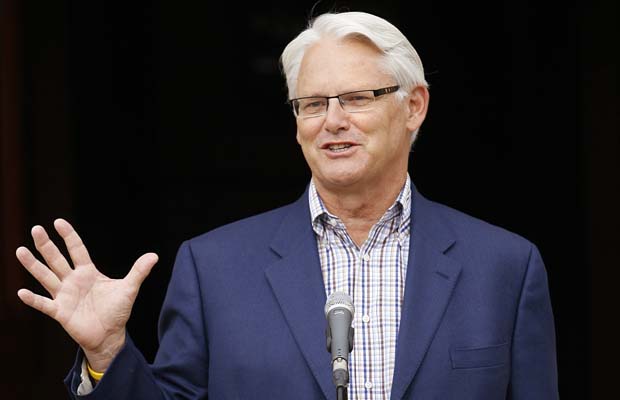 Premier Gordon Campbell is looking for an exceptionally short turnaround time for four different task forces on energy policy review to report back to government — he wants responses by January 2010, which is a nanosecond in the often ponderous regulatory world of B.C.'s electricity sector. (Photograph by: Todd Korol, Reuters files) |
VANCOUVER — B.C. Premier Gordon Campbell on Monday announced a sweeping, fundamental review of energy policy in British Columbia.
Speaking at the annual conference of the Independent Power Producers association of B.C., Campbell said the Liberals will strike four distinct task forces to work on various facets of the green power sector in B.C.
The intention is to make B.C. an international leader in green power development — both for this province and for export to markets including the United States and Alberta.
Its intention is also to attract and strengthen the independent power sector in B.C.
The task forces will review everything from the regulation of BC Hydro to community engagement in the development of new, private sector power development.
All four task forces stand under the umbrella of the Green Energy Advisory Task Force that was announced in the B.C. Throne Speech last August.
Campbell is looking for an exceptionally short turnaround time for the task forces to report back to government — he wants responses by January 2010, which is a nanosecond in the often ponderous regulatory world of B.C.'s electricity sector.
Campbell also announced a new cabinet committee to which the task forces must report. It includes himself, Environment Minister Barry Penner and Energy Minister Blair Lekstrom, as well as the chairs of BC Hydro and BC Transmission Corp.
In a press release, the government detailed the task forces as follows:
• Green Energy Advisory Task Force on Procurement and Regulatory Reform. This task force will recommend improvements to BC Hydro's procurement and regulatory regimes to enhance clarity, certainty and competitiveness in promoting clean and cost-effective power generation; and identify possible improvements to future clean power calls and procurement processes.
• Green Energy Advisory Task Force on Carbon Pricing, Trading and Export Market Development. This task force will develop recommendations to advance British Columbia's interests in any future national or international cap and trade system, and to maximize the value of B.C.'s green-energy attributes in all power generated and distributed within and beyond B.C. borders. The task force will also develop recommendations on carbon-pricing policies and how to integrate these policies with any cap and trade system developed for B.C.
• Green Energy Advisory Task Force on Community Engagement and First Nations Partnerships. This task force will develop recommendations to ensure that first nations and communities see clear benefits from the development of clean and renewable electricity and have a clear opportunity for input in project development in their areas. It will work in partnership with first nations, not only to respect their constitutional right, but to open up new opportunities for job creation and reflect the best practices in environmental protection.
• Green Energy Advisory Task Force on Resource Development. This task force will identify impediments to and best practices for planning and permitting new clean, renewable-electricity generation to ensure that development happens in an environmentally sustainable way. The task force will also consider allocation of forest fibre to support energy development and invite input from solar, tidal, wave and other clean energy sectors to develop strategies to enhance their competitiveness.